
A Group of IPB Researchers Developed TOGA as Primadona for Urban Farming of Desa Karya Mulia
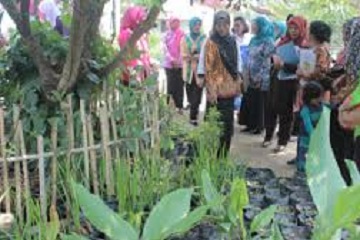
A group of researchers of Bogor Agricultural University (IPB) implemented a series of analysis and identification of TOGA (Tanaman Obat Keluarga Family Medicinal plants) for urban farming development in transmigration areas. Medicinal plants is essentially a good piece of land in your backyard, garden or fields are used to grow plants that have medicinal properties in order to meet family needs for drugs. Garden of medicinal plants or medicinal materials then are distributed to the public, especially drugs derived from plants. The fact is that with the help of drugs of natural origin ingredients, people can overcome their health problems. This suggests that drugs derived from natural sources especially plant material has demonstrated its role in the administration of public health efforts. Realizing the importance of medicinal plants, conservation have been going for ages by the indigenous communities. TOGA program besides reducing family spending on medicines, also serves as sources of medicinal plants supply for traditional industries and a means to increase people’s income. Thus, this is the aims of the research programs carried out by A group of researchers of IPB, and their targeted area was Karya Mulia Village, Prabumulih City, South Sumatera Province.
Medicinal plants are widely used in traditional medicine in both underdeveloped and developing countries in the word until now. Some secondary metabolites isolated from medicinal plants have been developed as modern drugs. TOGA cultivation in Karya Mulia Village has been going on for a long time but has been managed specially in recent years. Now in the yard of the village community has been easy to find a variety of medicinal plants both on land that special TOGA development was also done in a special field.
The group of researchers of IPB who carried the research program were Yulia P. Wulandari, Adi Firmansyah, Sumardjo, and Rudi Zariansyah. This research program was initiated by the Centre for Conflict Resolution and Empowerment Study of the Institute of Research and Community Service of Bogor Agricultural University (LPPM IPB), in collaboration with the Department of Communications and Community Development, and Community Development Officer of Pertamina EP Asset 2 Limau.
The study was carried out for seven months, on April-October 2016. The method used were survey and interviews for a number of respondents directly involved in urban farming activities. Namely village government officials, members of women farmer groups (KWT) Karya Lestari, community leaders, and business practitioners of herbal medicine.
To determine the development strategy of TOGA in Karya Mulia Village, the team performed both internal factor evaluation (IFE) and external factor evaluation (EFE) analysis. This study has also investigated the impact of TOGA farming development on the communities.
The results show that the factor for successful implementation of the TOGA-based urban farming supporters in Karya Mulia Village is good participation from the village policy stakeholders. People do not hesitate to innovate, especially supported the high potential of the village. It is expected that the research program carried by IPB team will improve the community knowledge on TOGA. The community’s knowledge will be improved if it is complemented with scientific research on the active substances of the medicinal plants, conducted by universities. So, sustainable research is needed in order to develop the knowledge qualitatively and quantitatively. It is also important to protect this local wisdom, so it will stay as the property of Indonesian nation.
"Another factor is market opportunities and partnerships that are still open to support sales of TOGA results from Desa Mulia Village," said Yulia.
The research also identified the appropriate strategy to develop the concept of urban farming in Karya Mulia Village through product diversification, market development and partnership development.
Then how the impact of urban farming based on TOGA in the village environment? The research revealed that the intensification of TOGA through urban farming will increase the soil of the village as well as optimizing the utilization of existing land. Through the same concept there will be an increase in family income and business opportunities, as well as the emergence of institutional strengthening and the role of village women Mulia's work. Cultivation of medicinal plants in a grower's field is a recent phenomenon. Despite dense urbanization, medicinal plants still play a key role in the health care of the local population. Plants commonly used as traditional medicines in rural areas could still be found in the city, and were collected and used by the local population. (Wied)

