
A Group of IPB Researchers Analyzed Antibacterial and Antibiofilm Activity of Biduri Plants
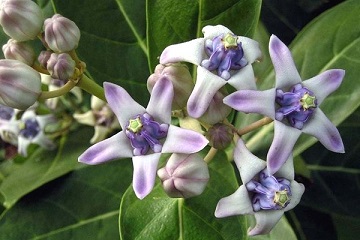
Several types of bacteria can form biofilms that can cause bacteria resistant to antibiotics. A biofilm is any group of microorganisms in which cells stick to each other and often also to a surface. These adherent cells become embedded within a slimy extracellular matrix that is composed of extracellular polymeric substances (EPS). Formation of biofilm is a survival strategy for bacteria and fungi to adapt to their living environment, especially in the hostile environment. Under the protection of biofilm, microbial cells in biofilm become tolerant and resistant to antibiotics and the immune responses, which increases the difficulties for the clinical treatment of biofilm infections. Biduri (Calotropis gigantea) is believed to treat toothache caused by bacteria, but the potential for bioactivity of biduri is not widely known. C. gigantea is known for various medicinal properties in traditional medicinal system and use to cure a variety of diseases.
A group of researchers of the Department of Biochemistry, Faculty of Mathematics and Natural Sciences, Bogor Agricultural University (FMIPA-IPB) implemented the research program on the cytotoxicity, antibacterial activity and antibiofilm of biduri plants. The researchers were M. Maftuchin Sholeh, Popi Asri Kurniatin and Inda Setyawati.
Popi Asri said, people have long used the medicinal plants as an alternative in the treatment of diseases. Various studies had been carried out to determine the utilization of medicinal plants as antibacterial drugs. Based on the results of previous research, biduri leaves extracted with water has antibacterial activity against Vibrio alginolyticus and Aeromonas hydrophilla. Empirically, biduri is often used to treat the toothache of Lamongan and Acehnese. Biduri leaves essential oil is a potent antibacterial that is my second best choice as a tooth and gum pain remedy.
She said, bacteria E. coli, S. aureus, P. aeruginosa are found in the human body and animals. E. coli bacteria are found in the large intestine as normal microbes. S. aureus is often found in the skin and associated with other bacteria. P. aeruginosa is present in the respiratory tract, i.e. the lungs. In addition, the bacteria that are often encountered in the human body is Streptococcus mutans that cause dental disease.
Se also added, these bacteria can form biofilm that is a collection of bacteria attached to the biological surface or inanimate objects. These bacteria can produce polymer matrix in the form of exopolysaccharides. So it is necessary to explore the antibacterial and antibiofilm compounds made from natural plants biduri (C. gigantea).
The result of phytochemical analysis showed that the sap and leaf extract of biduri contain flavonoids, saponins, steroids, and triterpenoids. LC50 sap value of 1690 μg / mL, water extract 570 μg / mL, ethanol extract 96% 5970 μg / mL, and n-hexane extract of 760 μg / mL.
The LC50 value indicated that 96 percent of sap and leaf extract of biduri do not have bioactivity potential. Water extract and n-hexane have a relatively small bioactivity potential. The sap and leaf extract of biduri showed no antibacterial and antibiofilm activity. (Wied)

