Recommendations Prepared by the FGD of IPB for the National Sugar Industry
Although it has existed since the Dutch colonial period, the fate of the Indonesian sugar industry is not as sweet as its product. Many issues continue to plague the national sugar industry, ranging from aging factories, reduced sugarcane fields, farm inefficiency and low productivity to a flood of cheap imported sugar due to poor market regulation. Such issues had been taken as the topic of discussion by Bogor Agricultural University recently. As the population of Indonesia is young and growing rapidly, and their income has also risen as well. These factors have led to a strong growth in the use of many consumer products, including sugar and items containing sugar, such as confectionery and beverages. Sugar consumption in 2017 reached 3.02 million tons for household consumption and 3.25 million tons for the food and beverage industry. Meanwhile, sugar production each year only reached 4.99 million tons per hectare. This condition makes Indonesia always import to cover the shortfall. In general, Indonesia’s sugar industry plays an important role in the country’s economy.
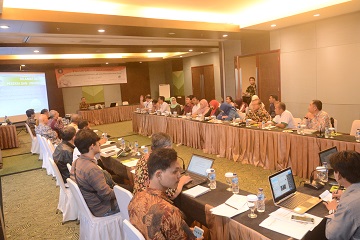
This was the stated in the press release issued by the Direktorat Kajian Strategis Kebijakan Pertanian (KSKP Directorate of Strategic Studies and Agricultural Policy) of Bogor Agricultural University (IPB) during the Focus Group Disscussion (FGD) with the theme "Policy Development for Sugar Industry in Developing Farmers", at IPB International Convention Center (IICC), Bogor, on 29 August 2017. Various elements, ranging from farmers, students, IPB alumni, stakeholders, industry and researchers involved in this Discussion.
Resource persons invited for the special event were Dr. Agus Wahyudi from Directorate General of Plantation, of the Ministry of Agriculture of the Republic of Indonesia; Ir. Abdul Rohim from the Directorate General of Agro Industry, Ministry of Industry; Agung P Murdanoto, the Director of Business Development and Investment of PT. Rajawali Nusantara Indonesia; Mahendra Kusuma, Chairman of IPTEK Division of IPB Alumni Association; Prof. Dr. Agus Pakpahan, Researcher of IAARD; Dr. Purwono, Researchers from the Department of Agronomy and Horticulture of the Faculty of Agriculture of Bogor Agricultural University (FAPERTA IPB); and Rudi Ginting, sugar cane farmer.
Dr. Agus Wahyudi from the Directorate General of Plantation said that Indonesia harvests about 400 000 ha of cane for centrifugal sugar, three-quarters of which are from Java, 46 percent of those are cultivated by small scale farmers. Meanwhile, under its short term plan to meet sugar supply, the government has decided to expand sugar cultivation and they will be focused in Lampung, South Sumatra, Bengkulu, Jambi, Southeast Sulawesi and Merauke. In Lampung, 70 percent sugar cane plantations are owned large plantation companies.
He said that the plantations reached 450,000 hectares, with cane production at 2,5 million tons, and cane productivity of 5.50 tons per hectare. The target in 2019-2020 to achieve sugar production of 3,3 million tons, the productivity of sugarcane plantation must be raised to at least 6 tons per hectare from the current 5.5 tons per hectare with sugarcane area increased to 505 thousand hectares and productivity of 600 tons per hectare. So to meet 505 thousand requires an increase of 55 thousand hectares area, assuming half a ton per hectare.
Despite its position as one of strategic commodities in Indonesia, effort to increase sugar production to meet national demand has always been faced by obstacles by limited land availability and chronic inefficiencies in sugar mill and sugarcane plantation. Implementation problems arise due to sugar cane areas expansion for increasing sugar productivity include climate change, and shifting agriculture, system of cultivation that preserves soil fertility by plot (field) rotation. Meanwhile, problems outside Java are very complex such as complicated land tenure land use; farmers are not familiar with sugarcane farming; related to security and infrastructure issues, such as land conversion and competition of scarce land resources with other economic activities.
The yield of Indonesian sugarcane is apparently reasonable, even higher than that achieved in Thailand as the second largest sugar exporter, but harvesting techniques, time of harvesting, and the mills’ processing efficiency need to be improved. Furthermore, irrigation development and greater attention to fertilization could lead to improvements in both yield and cane quality, while better transportation systems could reduce sugar losses between harvesting and processing. Strong extension component focusing on the development of sugar cane productivity is really required. Meanwhile, related to the scarce labour, farmers have to re-grouping the mechanization of overlay groups.
In the meantime, Dr. Purwono explained that improved productivity and quality of sugarcane will increase farmers' income. " Steps to be taken to achieve better results by the Indonesian industry among other are higher of cane yield, varieties with high sucrose content, good ripening conditions, well managed mechanised harvesting, and good supply chain management (in terms of logistics). Better cane varieties are those with higher sugar content which produce more sugar per hectare and t reasonable prices. Other factors that favour the Indonesian industry are long ratooning, and excellent crop agronomy (fertiliser, weed control, and irrigation management). And well management of agricultural and plant waste. In addition, the proper sugar trade and sugar policy reform will increase farmer’ incomes. If all of these issues can be addressed, and if the factors that led to the decline in the Indonesian sugar industry can be corrected, the prosperity of the sugar industry in Indonesia should be recovered.
The development of the sugar industry requires policies and facilities, both in the arrangement / construction of sugar factories, sources of funds and trade administration. In the recommendations prepared by the FGD, that the government intervention in the future should focus on the application of improved sugar cane production technology and promote investment on rehabilitation of the sugar processing industry. The government's commitment to increase the productivity and quality of sugarcane farmers is really needed to convince farmers that their products will be purchased so farmers will cultivate sugar cane continuously. It is also proposed that the arrangement of SOE sugar factories, as it is very strategic, and will affect the income of sugar cane farmers. In addition, partnerships program between farmers and sugar mills should be evaluated. The implementation of sugar cane production policy, and price & trade policy will be the reference for deciding the highest retail price (HET) which be based on applicable production costs. (Wied)