Contribution of IPB Students for Ngejo Competition in Purwakarta Regency
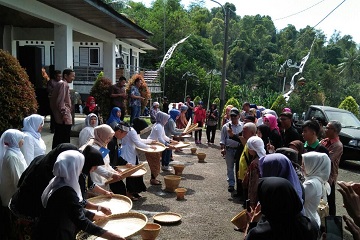
In order to commemorate 186th Anniversary of Purwakarta city and 49th of Purwakarta Regency, the Department of Food and Agriculture of Purwakarta District organized Ngejo Competition. Ngejo is the rice cooking contest utilizing ancient skills and inherited by our ancestor, especially in the land of Sunda (West Java). The theme of the event was on "Ngejo Nganjang ka Bareto Summarizing Jaganing Geto" which means cooking in a traditional way, healthy in the future. This activity has combined the Sundanese art and agriculture, to attract more and more people love Indonesian agriculture.
Head of Food and Agriculture Office of Purwakarta Regency, H. Agus Dahlan Suherlan, explain that the thematic field work (KKN-T) of students of Bogor Agricultural University (IPB) will nurture a love towards agriculture, especially the young generation in Purwakarta .
The total number of participants for Ngejo Competition were 52 (fifty two) participants from Regional Government Organizations such as Dinas and Kecamatan in Purwakarta District. Ngejo Competition uses premium rice grown by farmers in Purwakarta. Criteria set for Ngejo Competition starts from the way they do the 'napian beas' whether they appropriate or not. The way they cook their rice (tanak = steaming), up to how they serve their rice in accordance to Sundanese table manners.
"This activity is a local wisdom that must be preserved. Although some communities have applied advanced technology in their life, however they should not forgot their traditional culture. This method will encourage the young Indonesians nurture a love of agriculture," said Muhammad Wahid, one of KKN-T participants from the Faculty of Agriculture IPB.
This activity is supported and established in cooperation with Kelompok Tani, Kelompok Wanita Tani, and Hidata Pemuda Tani (Hidata) of Purwakarta Regency. "Hopefully, Indonesian agriculture, especially the Purwakarta Regency, will increase the yields of its agricultural land and improve the quality of agricultural products," said H. Agus Dahlan. (Wied)