
A Team of IPB Researchers Implemented the Research Program on the Restocking for the Sustainability of Fish Resources
The stock of fish catches in Indonesia has decreased significantly due to overfishing, illegal fishing, habitat destruction, and pollution. Conventional efforts to arrange fishing activities have not yielded tangible results, so it needs a fish stock recovery action program.
Three researchers of the Faculty of Fisheries and Marine Sciences of Bogor Agricultural University (FPIK IPB), namely: 1). Am Azbas Taurusman, of the Department of Fisheries Resources Utilization; 2). Ridwan Affandi, of the Department of Aquatic Resources Management; and 3). Tatag Budiardi, of the Department of Aquaculture implemented the research program on the restocking and integrated sea ranching on seagrass ecosystem for the sustainability of fish and food resources.
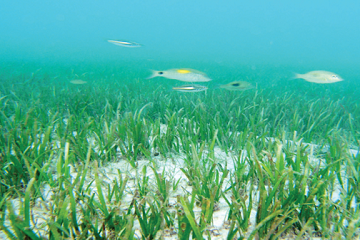
The objectives of the research were, to review the status of seagrass habitat and the future of tropical sea cucumber and abalone biota, then to do restocking and integrated sea ranching. The study was implemented on March to October 2016 in the area of Kepulauan Seribu National Park, Jakarta. The researchers conducted monitoring and evaluation of seagrass habitat status, sea cucumber and abalone biota in nature, and doing biota maintenance efforts in the test container.
The study revealed that to succeed, factors affecting recovery dynamics for both biota need to be understood, especially the widespread overfishing (chronic-overfishing) threatens the sustainability of sea cucumber. Until now, refinement of design and construction of test containers (keramba network tancap = Cage culture) is an extreme environment contains conditions that are hard to survive in Kepulauan Seribu. Meanwhile, change of the biota and inhabiting situation of abalone, its survival and growth can only be evaluated in test container, but no indication of breeding. (Wied)

