
A Group of IPB Students Utilized Red Snapper Skin Waste and Chitosan as Raw Material for Soap and Facial Cleanser
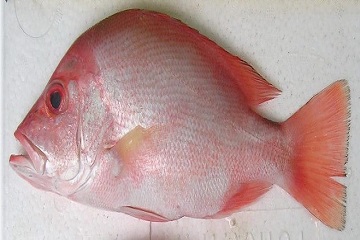
A group of Bogor Agricultural University (IPB) students utilized red snapper skin waste and chitosan as raw material for soap and facial cleanser, for their study on "Transparent Beauty Soap Collagen-Based Skin Waste Red Snapper (Lutjanus sp.) and Chitosan as Cleanser Face". The group of students of Faculty of Fishery and Marine Science – FPIK for Program Kreativitas Mahasiswa bidang Penelitian (PKM-P Student Creativity Program for Research) consisted of Elly Rohaeti, Syifa Najmi Fauziah, Siti Agni Maharani, Anonius Sugiyanto, and Bella Febriana, implemented a special program for innovation to reduce the waste of fishery industry and shrimp shells. The content of collagen and chitosan from both materials has been widely applied to the food industry, biomedical, pharmaceutical and cosmetics.
Data from the Ministry of Marine Affairs and Fisheries (KKP) RI in 2013 revealed that the national production of red snapper in Indonesia tends to increase an average of 7.06 percent per year. The developed red snapper industry is red snapper fillets, both in fresh and frozen. These developments also impact on the byproducts or waste generated in the form of fish heads, bones, meat, stomach contents, scales, and fish skins. Fish processing generates solid wastes that can be as high as 50 – 80% of the original raw material, about 10-15% of these wastes consist of skin and bone with high collagen. In addition, shrimp farming has emerged one of the important economic activities. Almost all farm produced shrimp are exported as processed frozen sea food “the headless frozen shrimp’. The production will leave shrimp waste, that is heads and shells, leaving a waste of shells and shrimp heads. "Based on the wastes caused by shrimp and fishing industry, it has given us initiative to utilize red snapper skin and shrimp wastes for other product," said Elly.
Collagen is the main structural component of white tissue covering nearly 30 percent of total protein in the body. Collagen serves to improve skin moisture, maintain skin elasticity and prevent skin from free radicals. " Collagen has been mostly found in the skin of red snapper," she said.
Chitosan is a unique biopolymer, it is a natural polycationic linear polysaccharide derived from chitin. Chitosan has anti microbial properties, because it can inhibit pathogenic bacteria from microorganisms, including fungi and bacteria. Chitosan can be obtained from crustacean shell waste such as shrimp and crab.
"The extracted collagen is mixed with other materials to produce transparent soap that are slightly transparent and clear. This soap can be used to cleanse the face and to clean the body, as it produces a soft foam for the skin and will gave shiny appearance when compared with other soaps, "said Elly.
The study had been implemented at the Aquatic Products Technology Laboratory of FPIK IPB. The process included the collagen extraction methods, soap making recipes and formula, laboratory analyses, and the product testing. Up to now, product testing and soap making recipes and formula are still in progress.
In the future, the group expected that they will improve their skills to utilize "waste" or by-products of fishing industry better to produce value-added products. Report of their study will be published, they plan to mass produce and apply for patent of their product formulations. (Wied)

