
Veterinarians of IPB Assisting The Agriculture and Livestock Services to Supervise the Health of Animal Sacrifice
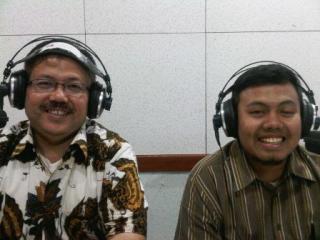
Slaughter of sacrificial animals require appropriate supervision of veterinarian. This supervision is to ensure the provision of meat to be safe, healthy, intact, and kosher (ASUH). This was stated by Dr.med.vet.drh. Denny Widaya Lukman, M.Sc., faculty member of the Faculty of Veterinary Medicine of IPB, as a resource person for Siaran Pedesaan at RRI Bogor, recently.
Checking of sacrificial animals, according Dr.Denny, will include its health before being slaughtered (antemortem), and after being slaughtered (postmortem). Postmortem check is important to evaluate the status of its meat and intestines. Monitoring the implementation of animal welfare strategy is really required, to see how the animals are housed and cared for which give us a good impression of the actual animal welfare standard.
Dr. Denny also explained, standards for animal welfare monitoring is important the to ensure healthy status of the slaughtered animals and they were housed and cared appropriately, rightful process for slaughtering by Muslims slaughterhouses, to ensure that meat and inner parts are safe and suitable for consumption, as well as the monitoring of infectious animal diseases that must be reported.
In accordance with the Law No. 18 Year 2009 on Animal Husbandry and Animal Health, slaughter of sacrificial animals must be implemented outside the abattoir (slaughterhouse), but they should be under the supervision of a veterinarian. Slaughterhouses supervisory authority is the Animal Health and Veterinary Public Health Services.
As the number of slaughterhouses are plenty and they located in various locations, with limited number of inspectors of Dinas Pertanian dan Peternakan, they have requested FKH IPB to assign students and faculty members of FKH IPB to supervise the slaughter of sacrificial animals.
On the year 2014, there are five districts / cities which signed cooperative agreement with FKH IPB which will supervise the sacrificial animals, namely:
1. Animal Husbandry and Fisheries Services of Bogor Regency;
2. Marine and Agricultural Services of Jakarta;
3. Agricultural Services of Bogor;
4. Agricultural Services of Depok; and
5. Agriculture and Livestock Services of Tangerang Regency.
There were 674 (six hundred and seventy four) students and 50 (fifty) faculty members of the FKH-IPB who participated on the said project.
Placement of students and faculty were set by the Services (Dinas). Those who will be assigned in Bogor, Depok, Jakarta and the Thousand Islands will be assigned to take the posts one day before the Eid al-Adha day (H -1).
FKH IPB had organized special training for students, especially the new comers. Training for new inspectors student covers the theory and practice of antemortem and postmortem examination.
FKH IPB has also commissioned several professors as resource persons for the training course on the examination of sacrificial animals at the request of some of the Dinas which are in charge of animal health and veterinary public health, including the city of Depok, Bogor, Sukabumi, and some areas in Jakarta.
On 28 September 2014, FKH IPB, in particular the National Zoonoses Center, in collaboration with the Dinas Peternakan dan Perikanan Kabupaten Bogor (Animal Husbandry and Fisheries Services of Bogor) will organize one day training for members of DKM Mosque, Bogor district. Training will cover the theory and demonstration of delivery of kosher slaughterhouses and healthy, as well as antemortem and postmortem examination. (Wied)

