
STATISTICS: PAST, PRESENT, AND FUTURE
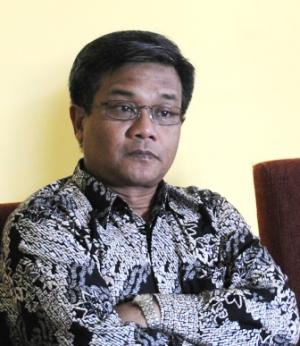
Forty-two years ago Prof. Andi Hakim Nasoetion read the oration of his professorship entitled of ‘Statistika Sebagai Tongkat Di Daerah Ketidaktahuan / Statistics As Stick in the Ignorance’. He explained at the time how important was the statistics as the tool for drawing conclusions. His prediction, in the future the complexity of life was higher and the strategy of IPB was to face the year of 2000.
With the growing strength of the information technology in the data storage then leading to a larger data, the statistics were now more sexy. Today statistical alumni filled 74.36% of Non-Civil Servants and 25.64% of Civil Servants. From the group of non-civil servants were generally researchers (55.13%), as for the group of civil servants were relatively balanced between researcher-administration. In general, the alumni were researchers (67.95%).
“The data form the basis for future development and the statistics become the staple in business competition. Uncertainty territory becomes increasingly narrow. Analytic thinking is strongly associated with the competitive advantage that will win the business competition. Therefore, a statistician must master other disciplines so that he is able to articulate in a more meaningful analysis. This is once stated by Prof. Andi,” said Prof. Asep Saefuddin in the summary of Scientific Oration titled of “Statistika: Dulu, Kini dan Masa Depan / Statistics: Past, Present and Future” delivered in the Press Conference in the Meeting Room of Academic and Education, Campus of IPB Dramaga (19/9).
Prof. Asep was one of the Professors of Bogor Agricultural University (IPB) to be confirmed by IPB tomorrow on 20 September 2014 in the Auditorium of Andi Hakim Nasoetion, Campus of IPB Dramaga. According to him, the role and significance to understand the statistics in the data-driven development became important, not just for the research purposes for statisfying the desired scientists.
At the district, provincial and national levels, the data collection neatly enumerated from the village would be a large data, so that the national development and the public welfare was easily measured and evaluated. The accumulation of data occured in almost all sectors of life, such as health, living environment, social, economic, and political, and so on. Large data in various fields always inserted the statistics as a tool to obtain predictions and draw conclusions.
“Do not be surprised if in the various social, economic, marketing, and politic pollsters kitchens nowaday many are the cooks of the alumni of IPB. Examples such as when the polemics election on quick count yesterday, two professors of IPB are forced to intervene, namely Prof. Khairil and I myself,” he said.
Statistics as the data-intensive science was increasingly needed, because in it involved three main activities, namely: deterrence, processing, and analysis. In the context of this, the data storage, not only its size but also its complexity, became large.
The issue of Indonesia from various aspects required the science-based solutions. The nature of higher education not just passed the undergraduate, masters and doctoral without any recommendation that could be run by the country and perceived the use by the community. IPB should be strong with the transdisciplinary approach, the strength of quantitative approach and the qualitative perspective.
“Scientific traditions of academic culture with the characteristics of the objective scientific, full with tolerance, open and rational that have become the foundation of IPB are the duty of the next generation to maintain, continue and develop,” he said.(zul)

