Greening Former Limestone Mining Sites with Bioactivators, IPB University Innovation Named Among 117 Indonesian Innovations 2025
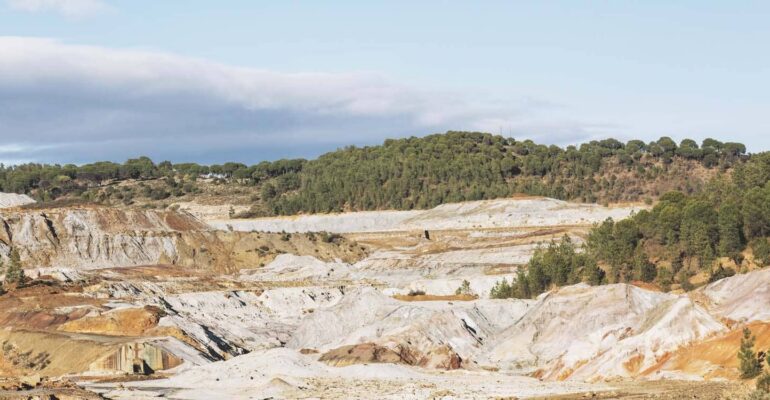
An innovation by IPB University lecturers has been selected as one of the most promising innovations in the 117 Indonesian Innovations 2025 event organized by the Business Innovation Center (BIC). The innovation was developed by Dr Nisa Rachmania and her team.
Titled “Collaboration of Green Microorganisms to Green Limestone Mining Land,” this research focuses on the use of local microorganisms to support the composting and revegetation processes of former limestone mining land.
This formulation consists of Bacillus paramycoides A.1.4 bacterial isolates and Penicillium singorense 1.1.a fungi originating from the soil of the revegetated area of the former limestone quarry of PT Indocement Tunggal Prakarsa Tbk Citeureup.
“The revegetation area in the environment of the former limestone quarry in Citeureup has the potential for organic carbon from dead plant waste containing cellulose, hemicellulose, and lignin. From the soil and plant debris, we isolated bacteria and fungi that produce decomposing enzymes,” she explained.
The two potential microorganisms that produce cellulose and lignin degrading enzymes were then combined into a consortium as a bioactivator formula for composting plant residues in the revegetation area.
According to Dr Nisa, tests showed that composting and fertilization using the formulation of these two microorganisms yielded better results than commercial products.
“This shows that the two isolates are adaptive to the former limestone mining environment. These two species have never been reported as components of commercial fertilizers,” she explained.
She added that the two isolates are not pathogenic to humans and animals. Based on a literature review, Penicillium singorense is also not a plant pathogen.
In additional tests, the bioactivator formula was proven to reduce plant waste weight by 86 percent, much higher than other commercial products, which only reduced waste by 15 percent.
In a limited field test covering an area of approximately 50 square meters, the increase in the height of calliandra plants reached 9,8 percent with the formula treatment, compared to 9,1 percent with commercial products.
“From the results of this study, the two isolates have the potential to be used as biological fertilizers and starters for the composting process in limestone mining areas or land with similar soil composition,” she said.
Dr Nisa emphasized that this innovation still needs to be tested on a larger planting scale. She also encouraged the storage of potential microbial isolates in culture collections, such as the IPB Culture Collection, to ensure their preservation and use as standard isolates for indigenous Indonesian biofertilizers.
“For downstream processing, institutional and government support is needed so that the benefits of biofertilizers can reduce the use of synthetic chemical fertilizers and improve the quality of organic fertilizers. For farmers and agricultural practitioners, biofertilizers can improve soil and plant fertility after repeated application,” she concluded. (Fj) (IAAS/LAN)