
IPB University Faculty of Medicine Officially Changes Name to Faculty of Medicine and Nutrition
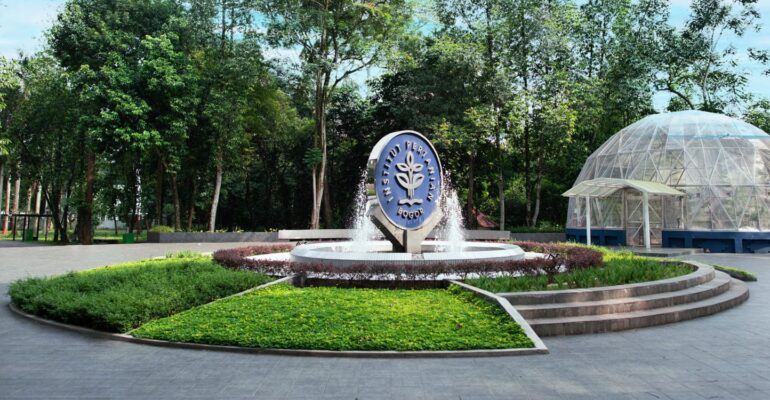
IPB University has officially established the Faculty of Medicine and Nutrition (FKGiz) as a strategic step to address increasingly complex national health challenges. This faculty is the result of combining medical education with IPB University’s strengths in nutrition, food, bioscience, and public health, while also presenting a new model of integrated health education.
IPB University Rector Dr Alim Setiawan Slamet said that the merger of the Faculty of Medicine and the Department of Community Nutrition is a strategic step to strengthen the development of science, education, and research in the integrated fields of health and nutrition, which are relevant to national and global challenges.
Additionally, he emphasized that this step aligns with IPB University’s transformation as a bioscience and agromaritime-based university, while also reinforcing the one health and life-course approach paradigms.
“This integration is expected to drive the development of integrated medical and nutrition science, based on tropical bioscience, and oriented toward real solutions for society,” he explained.
The Dean of the Faculty of Medicine and Nutrition at IPB University, Dr dr Ivan Rizal Sini, GDRM, MMIS, FRANZCOG, SpOG, explained that the establishment of FKGiz stemmed from the need for a more comprehensive and sustainable approach to health.
“Indonesia still faces serious problems such as stunting, malnutrition, metabolic diseases, maternal and child health, and the double burden of communicable and non-communicable diseases. These challenges cannot be solved through clinical medicine alone. The integration of medicine and nutrition is key to strengthening the national health system,” he said.
According to him, IPB University has strong academic capital to develop this approach. “IPB has historical advantages in the fields of agriculture, food, and nutrition. Therefore, through FKGiz, we position medical education within the framework of upstream to downstream health,” said Dr Ivan.
Through this approach, he continued, factors such as nutrition, food, environment, and behavior are not seen as complementary, but as integral parts of understanding disease and prevention efforts.
“We want FKGiz graduates to be able to see health issues holistically, from prevention to clinical management,” he added.
Furthermore, FKGiz is designed to produce doctors with a strong community-based herbal medicine approach, as well as a deep understanding of nutrition and food systems. This integration also strengthens the application of the Longitudinal Integrated Clerkship (LIC) model.
“This model allows students to gain continuous and contextual clinical experience, while encouraging the strengthening of translational research and academic efficiency,” explained Dr Ivan.
Launching the Nutritionist Study Program
As part of faculty development, IPB University is also launching a Nutritionist Study Program this year. This program aims to address the gap between the need for quality nutrition services and the availability of standardized nutritionists.
“Collaboration between doctors and nutritionists from the educational stage is crucial for building holistic, effective, and sustainable healthcare services,” he said.
To support the education and clinical practice process, IPB University is also planning to develop a teaching hospital. This facility will serve as a venue for interprofessional learning as well as a center for research and promotive and preventive health services. “The IPB teaching hospital is designed as a space for real collaboration between doctors and nutritionists,” he said.
In terms of career prospects, FKGiz graduates have broad opportunities in primary and referral health services, public health programs, the food and nutrition industry, government, and national and international research institutions.
“We are optimistic that FKGiz will produce health human resources who will make a real contribution to improving the health status of the Indonesian people,” concluded Dr Ivan. (AS) (IAAS/KQA)

