IPB University Researchers Reveal Women’s Involvement in Successful Sustainable Conservation
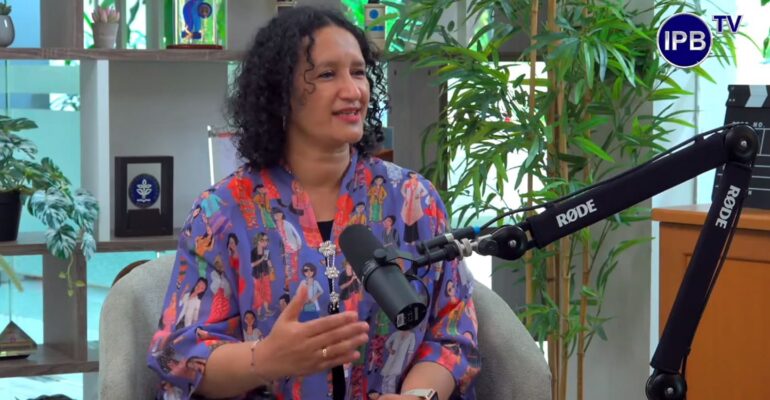
Women play an important and strategic role in sustainable nature conservation efforts. Not only as guardians of local wisdom, women’s involvement has been proven to contribute directly to preserving biodiversity, food security, and the success of various conservation programs at the grassroots level.
This was conveyed by a lecturer at the Department of Conservation Forest Resource and Ecotourism at IPB University, Dr Arzyana Sunkar, in the IPB Podcast titled “Women’s Perspectives on Realizing Sustainable Conservation,” which aired on IPB TV’s YouTube channel.
She emphasized that the role of women in conservation is often not fully recognized. “In conservation, women have many roles, but often these roles are not recognized or acknowledged. In fact, historically, the conservation movement has also been greatly assisted by women,” said Dr Arzyana.
When it comes to biodiversity and food security, women have a deep understanding of nature. According to her, food security cannot be separated from the role of women. This is because they are the ones who are responsible for ensuring the availability and quality of food for their families on a daily basis.
“When we talk about biodiversity and food, we are talking about women. Because women have the responsibility to ensure healthy and sufficient food for their families,” she explained.
The Important Role of Women
Dr Arzyana also shared her research experiences in various regions. In Gayo, Aceh, women’s knowledge of local plants is utilized for plant conservation through cooking and oral culture. Meanwhile, in Klaten and West Bali, women involved in bird breeding have shown higher rates of breeding success.
“The research results show that when women take care of the birds, the survival rate of the chicks is higher. There is more love, attention, and time,” she said.
Another example comes from the indigenous Molo community in East Nusa Tenggara. Local women play a major role in protecting their customary lands from industrial threats through peaceful actions such as weaving, which symbolizes their dependence on nature for their livelihood.
“Women know what is needed, where it is, and how to protect it, because they live directly from those resources,” she said.
However, Dr Arzyana believes that women still face many challenges in conservation, especially in terms of culture and involvement in decision-making. In fact, various studies show that the involvement of women actually results in better environmental conservation policies and practices.
“Many studies show that when women are involved in decision-making, conservation outcomes are better. The challenge now is how to provide real recognition and support,” she said.
She emphasized the importance of policy and institutional support, as well as assistance, so that women’s potential in conservation can be maximized. According to her, recognizing the role of women is not merely an obligation, but a great opportunity to preserve the environment. (Fj) (IAAS/EPK)