Mens Rea Sparks Reactions, IPB University Sociologist: Critical Comedy Effectively Reveals the Face of Injustice
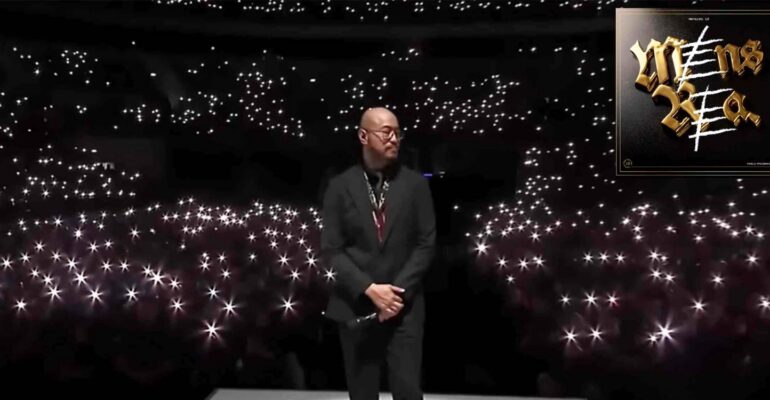
The critical comedy performance Mens Rea by Pandji Pragiwaksono is considered not merely a form of entertainment, but also a space for serious reflection on structural inequality within Indonesia’s legal system and power relations. This view was expressed by Dr Ivanovich Agusta, a Rural Sociologist at IPB University.
He assessed that Mens Rea serves as an effective medium of social critique because it highlights unequal access to justice through a language that resonates with the public.
In criminal law doctrine, mens rea refers to the element of criminal intent that must be proven to convict an individual. However, according to Dr Ivanovich, the use of this term as the title of the performance symbolically reverses legal logic.
“Pandji is not confessing a personal wrongdoing, but rather accusing that the ‘criminal intent’ resides within structures of power. The comedy stage transforms into a public courtroom, where political elites and state officials are tried through satire and laughter,” he explained.
Furthermore, Dr Ivanovich argued that institutional responses to the performance have, in fact, reinforced the very criticism being conveyed. When critical comedy went viral, the response that emerged was not counter-discourse or policy dialogue, but legal reporting through the use of elastic legal provisions.
“This demonstrates who has access to mobilize the law. Comedians who criticize power can easily be reported, while elites with controversial policies remain largely untouched by similar accountability mechanisms,” he asserted.
According to his view, critical comedy has the potential to function as a social bridge for issues affecting marginalized groups. Through popularity and social capital, Pandji is seen as lending public space and attention to issues that have long been sidelined.
“Comedy functions as bridging social capital that connects the experiences of eviction victims, indigenous communities, or mining affected residents with the political awareness of the urban middle class,” he stated.
Nevertheless, Dr Ivanovich cautioned that such a bridge does not always rest upon the direct experiences of marginalized groups. Access to performances hosted on subscription-based digital platforms means that this form of social critique tends to be consumed only by certain segments of society.
In the context of agrarian conflicts and control over natural resources, he views humor as a social advocacy tool with two sides. On one hand, satire is capable of dismantling technocratic language and policy euphemisms that have long been difficult for the public to understand.
“Complex mining permit policies suddenly become language that is easily understood by society. This triggers public awareness,” he said.
On the other hand, simplification through humor also carries the risk of obscuring more fundamental issues, such as ecological damage and environmental injustice.
“The public may become trapped in moral criticism of particular actors and overlook the systemic problem of extractivism that destroys living spaces,” he added.
Dr Ivanovich emphasized that social criticism through comedy alone will not be sufficient to generate real change without the support of a broader ecosystem. In his view, academics and educational institutions play a strategic role in ensuring that such criticism does not stop at satire alone.
“Academics play a role in translating cultural criticism into scientific arguments and policy recommendations. Comedy opens awareness, but change requires research, advocacy, and measured legal action,” he concluded. (AS) (IAAS/KAL)