Highlighting Coastal Threats, PKSPL IPB University Strengthens Cross Regional Coordination
The South China Sea is known as one of the most strategic maritime regions in the world. However, despite its potential, this region faces serious threats due to coastal habitat destruction and pollution originating from land. These environmental pressures have not only local impacts, but also cross-border implications.
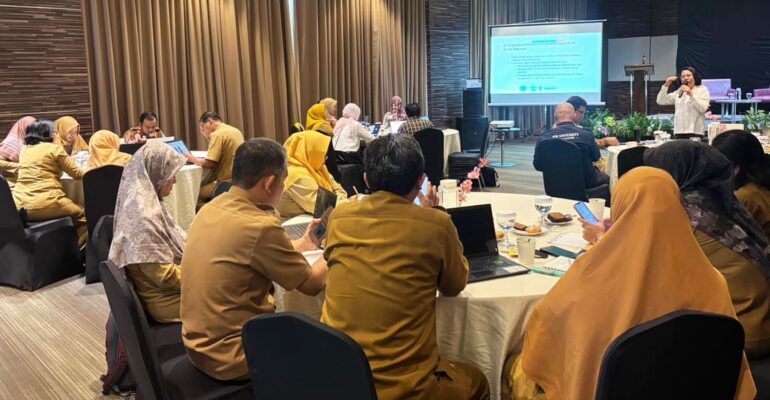
In response to these challenges, the Center for Coastal and Marine Resources Studies (PKSPL) at IPB University, in collaboration with the Ministry of Environment/Environmental Control Agency (KLH/BPLH), held a Workshop and Focus Group Discussion (FGD) on Transboundary Diagnostic Analysis (TDA) Data Collection.
“This activity is part of the preparation of TDA, a scientific approach used to identify and prioritize transboundary environmental issues in the South China Sea region,” said Dr Akhmad Solihin, representative of PKSPL IPB University.
The TDA results, he continued, will form the basis for the preparation of the Strategic Action Program (SAP) and National Action Plan (NAP) to promote more effective and sustainable coastal habitat management and pollution control.
The event was held as an effort to strengthen cross-sector collaboration in coastal and marine environmental management. Held at the Novotel Pangkal Pinang Hotel on Tuesday (1/13), the event was also supported by the Bangka Belitung Provincial Environment Agency.
The event was attended by 70 participants, consisting of heads of agencies and representatives of regional organizations (OPD) at the provincial and regency/city levels, vertical agencies (Ministry of Maritime Affairs and Fisheries, Ministry of Forestry, Ministry of Transportation), academics, and non-governmental organizations (NGOs).
The topics covered data and information on coastal habitat status and science based monitoring, management of land-based marine pollution and pollution sources for TDA and SAP revisions, policy reviews, regulations and financing mechanisms, economic valuation of coastal habitats and their relationship to the blue economy, and capture fisheries and aquaculture.
Dr Andri Nurtito, Expert Staff for Community and Human Resources, Bangka Belitung Provincial Government, said that the coastal areas of Bangka Belitung are currently facing considerable ecological pressure. Tin mining activities, coastal land conversion, and pollution from upstream areas are cited as the main factors contributing to the decline in the quality of the coastal and marine environment.
In line with this, the Director of Coastal and Marine Pollution and Damage Control at KLH/BPLH, Drs Sayid Muhadhar, MSi, explained that this activity aims to collect and verify the latest data on coastal habitat conditions, sources of pollution from land, and environmental management policies.
He emphasized that data collection is not only conducted in Bangka Belitung but also covers West Kalimantan and the Riau Islands. (*/Rz) (IAAS/EPK)