IPB University Closes 2025 with Strategic Achievements and Optimism for 2026
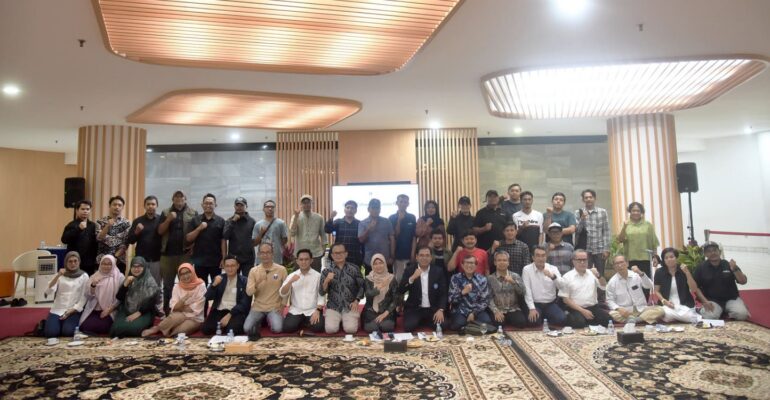
Closing 2025, IPB University reflects on various strategic achievements and the outlook for institutional development in 2026. 2025 was an important phase in the implementation of the IPB Strategic Plan (Renstra) 2024–2028, which affirms IPB’s Vision 2024-2028, namely “To become an innovative and resilient university for the sustainable advancement of the nation in building a globally superior techno-socio entrepreneurial university in the fields of agriculture, marine science, and tropical bioscience.”
Reflection on 2025: Consistency in Transformation and National & International Recognition
Rector Dr Alim Setiawan Slamet said that throughout 2025, IPB University showed consistency in carrying out higher education transformation to strengthen governance, improve the quality of education, research, innovation, and community service.
The number of IPB students as of December 31, 2025: 38.682, with the following distribution: D4=26%, S1=52%, S2=15%, S3=5%, and Professional=2%.
A total of 26,1% of lecturers at IPB University have achieved the Functional Position of Professor, and 21% hold the position of Associate Professor, an achievement that reflects the academic strength, scientific productivity, and maturity of the IPB research ecosystem.
“This proportion shows that more than a quarter of IPB lecturers are at the top of the academic ladder, with significant contributions to the development of science, leading research, impactful innovation, and national and global academic leadership,” he said.
Various priority programs in accordance with the Renstra are beginning to show tangible results, particularly in strengthening leading research, commercializing innovation, and IPB University’s contribution to national and global strategic issues such as food, energy, and water security.
In the QS World University Ranking By Subject Agriculture & Forestry, IPB University is ranked #49 in the world and #1 in ASEAN. In addition, in the recently announced THE WUR Interdisciplinary Science ranking, IPB University is ranked #42 globally and #1 nationally.
These global ranking achievements were accompanied by national recognition through 16 awards at the 2025 Diktisaintek Awards, the highest number nationally achieved by IPB University academics at both the institutional and individual levels. This number of awards is the highest among other universities in Indonesia.
“These awards reflect IPB University’s competitiveness and strength in higher education management, research, community service, and innovation oriented towards sustainable impact,” said Dr Alim.
From Innopreneurship and Value Creation for Community and Industry to Global Engagement: Expanding Networks and Global Impact
The year 2025 was also marked by the creation of important preconditions for strengthening IPB University’s Global Engagement in 2026. International collaboration in research, education, and innovation is being expanded through strategic partnerships with various world class universities (e.g., Stanford University, Oxford University, Peking University, Tohoku University NUS, SNU, SLU, WUR, MSU, UC Davis, etc.); international research institutions (e.g., Leibniz Institute, CATAS, etc.); industry (e.g., Daewoong), and international organizations (e.g., IUFRO, EU, ADB, GIZ, etc.). Student and faculty mobility, collaborative research, and IPB University’s involvement in global agendas related to food, sustainable agriculture, and climate change continue to increase, strengthening IPB University’s position at the regional and global levels.
Access to Quality and Equitable Higher Education
The Rector emphasized IPB University’s commitment to providing inclusive, equitable, and affordable higher education through transparent admission procedures, proportional admission quotas, and tangible support for students from various social and regional backgrounds. In the 2025 new student intake, IPB accepted 9.662 multi-level students from 35 provinces, 20% of whom were from Sumatra.
IPB University provides a variety of new student admission pathways designed to accommodate academic potential, non academic achievements, and diversity in regional and socioeconomic backgrounds. These pathways include: SNBP, SNBT, OSIS Chair, Talent, BUD, and Independent Selection. IPB University also provides 8.500 free accounts for students who wish to take micro-credentials on various online learning platforms.
The development of students’ soft skills is carried out through various training/competency assessment programs, talent and interest programs, community service, talent pools, and entrepreneurship programs. To support access to education for students, IPB University provides scholarships and tuition assistance. More than Rp138 billion in scholarship funds in 2025 will reach students. Nearly 40% of IPB University students are scholarship recipients.
Additionally, IPB University develops various student welfare programs such as student counseling services, free fruit and milk programs, the healthy canteen “Warung Kita,” and a food bank.
Impactful Research and Innovation
In the field of research and innovation, the Rector said that IPB University continues to encourage research that is relevant to the nation’s needs and capable of responding to global challenges, particularly on strategic issues of food security, sustainable agriculture, health, and bioeconomy. In 2025, research topics related to food will still dominate (50%), followed by health (17%), engineering (17%), and other fields.
IPB University continues to contribute to improving national food security through 10 food security action programs, namely:
- Procurement of 3.156 tons of IPB superior rice seeds for the Indonesian Ministry of Agriculture
- Expansion of the IPB Innovation Village for paddy and gogo rice on 1.125 hectares in Subang, Sukabumi, Bogor, IKN, and Papua
- Establishment of the IPB-KOICA Rice Innovation Center on the IPB campus
- Patriot Pangan expedition in collaboration with the Ministry of Transmigration
- Livestock based food innovation
- Smart Green House, Plant Factory, and Agri-Photovoltaic for high-value crop production
- Integration of weather and climate data from 100 Automatic Weather Stations (AWS) of farmers in Java & Sumatra into IPB Digitani
- Development of Climate Resilient Agroforestry innovations in social forestry areas, covering 2.000 hectares (upland rice, avocado, coffee, and durian in Garut, Cianjur, and Sukabumi)
- Aquaculture and bluefood innovations
- Establishment of a Center of Excellence (CoE) for the Free Nutritious Meals program (supported by UNICEF, Bappenas, and Bank Mandiri).
IPB University strengthens the innovation ecosystem and research commercialization, encouraging research outcomes to develop into applied technologies, commercial products, and community empowerment models. Collaboration with industry, government, and international partners is key to ensuring that campus innovations are widely adopted.
“This approach positions IPB University as an innovator campus, bridging the academic world with market and community needs,” he said.
From Campus to Village: IPB Affirms Campus Impact
By 2025, IPB University has reached and contributed to 8.350 (9,91%) villages in various provinces in Indonesia through community service programs, agricultural innovation, food, marine, and environmental initiatives. These activities target farmers, fishermen, MSMEs, youth, and women with a data driven approach tailored to local needs.
Various IPB innovations—from climate-smart agricultural technology, food product downstreaming, to strengthening the capacity of village communities—demonstrate that campuses can be engines of sustainable development.
The One Village One CEO (OVOC) program is implemented using a business ecosystem approach designed to connect farmers’ production businesses with modern markets (such as Indomaret, Total Buah Segar, All Fresh, and others). This program involves more than 1.000 villages throughout Indonesia.
IPB University Reduces Tuition Fees for Students Affected by the Sumatra Disaster
After previously carrying out various emergency response activities in areas affected by flash floods in Sumatra (Aceh, North Sumatra, West Sumatra), IPB University is now continuing its disaster relief efforts with medium term measures.
Short term actions (emergency response) included the delivery of food aid, medicines, piping to distribute clean water, satellite-based internet equipment packages, and the dispatch of doctors, lecturers, and students to provide health and nutrition services, as well as psychological counseling and recovery for victims, especially vulnerable groups (children, the elderly, pregnant/breastfeeding women).
IPB University sent 13 lecturers/doctors, 15 students, and 8 staff members to Aceh Tamiang, South Tapanuli, Agam, and other areas. They delivered IPB-based innovative food products in the form of 13.500 pieces of ready to use food for toddlers and 18.000 pieces of sterilized rice ready to eat. Psychosocial and health support, the Marandang Basamo initiative on December 6, 2025, and free dinner assistance in addition to subsidized lunch for 2.000 IPB students affected by the disaster.
“For medium term actions, IPB University has prepared a number of measures, including strengthening the transition from emergency food to more stable food, continued psychosocial recovery, reactivating agriculture, reviving MSMEs, and reviewing the single tuition fee (UKT) for students affected by the disaster,” explained the Rector.
Regarding UKT, several policy levels will be implemented: starting from installment payments, reducing UKT values, exempting UKT payments for students who take academic leave, to making it completely free. This policy will be implemented for at least 1 semester. A review is currently being conducted to find the right formula for each student affected by the disaster.
Kemdiktisaintek funded four proposals submitted by IPB University for emergency response and rehabilitation, namely logistics distribution, health and nutrition services, psychosocial assistance, and disaster mitigation and education.
Meanwhile, in the long term, IPB University will provide various affirmative policies that will be prioritized for areas affected by the disaster, such as Thematic Real Work Programs (KKN), Lecturer Service Programs, scholarships for new students from disaster-affected areas, and various studies/reviews/policy briefs on disasters.
Outlook 2026: Accelerating Impact and Global Competitiveness
Entering 2026, IPB University is committed to accelerating the implementation of the 2024–2028 Strategic Plan with a focus on the following programs:
- Increasing the impact of research and innovation through downstreaming and strategic partnerships with the community, industry, and government.
- Strengthening Global South Engagement that is more focused on impactful collaboration and international recognition, particularly in partnerships with universities and institutions in the Global South.
- Developing talented students and lecturers who are adaptive to global challenges.
- Making a tangible contribution to the government’s priority programs (Asta Cita) and Sustainable Development Goals (SDGs), particularly in the areas of food, energy, water, and the environment.
“With the foundation of 2025 achievements and a clear strategic direction, IPB University is optimistic about moving into 2026 as a university that is not only academically excellent but also relevant and impactful for Indonesia and the world,” concluded the Rector. (IAAS/LAN)