IPB University Expert: West Java’s Ecological Crisis Cannot Be Generalized
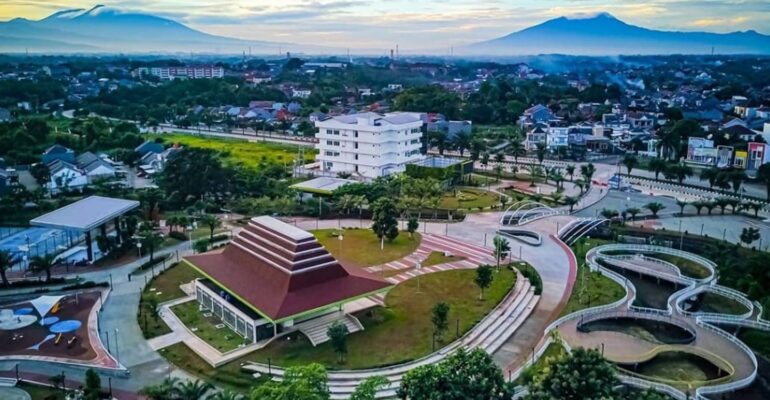
The pressure of massive development has made the ecological conditions in West Java (Jabar) increasingly complex. IPB University Political Ecology expert Prof Arya Hadi Dharmawan emphasized that the ecological crisis in West Java cannot be viewed uniformly, but must be understood based on the characteristics of each region’s ecosystem.
“To understand the condition of West Java, we must look at it based on the characteristics of the ecosystem. The ecological crisis that occurs differs between the northern, central, southern, western, and eastern regions,” said Prof Arya in a public discussion on TVRI, 12/29.
He explained that the northern part of West Java faces the highest pressure due to land use change. This area has become a tug-of-war between infrastructure development, industry, and the agricultural sector, exacerbated by the threat of coastal erosion and land subsidence.
“Land conversion in the northern region reaches around 2.000 hectares per year for toll roads, industrial areas, and shopping centers. This is a major challenge for West Java,” he said.
Meanwhile, the central region, particularly Greater Bandung, is experiencing significant ecological changes. Prof Arya noted that the Bandung Basin is experiencing deforestation in the upstream area and increasingly dense settlement accumulation in the downstream area.
“Deforestation in the upstream area and population accumulation in the basin increase the risk of flooding while accelerating environmental degradation,” he explained.
In the southern region of West Java, the ecological crisis is no less serious, especially in the watershed area (DAS). Prof Arya cited the condition of the Citanduy watershed, which stretches from Mount Sawal to the southern coast of West Java.
“Our experience in assisting the restoration of the Citanduy watershed shows an extraordinary crisis, from upstream to downstream,” he said.
Meanwhile, the western part of West Java, which borders DKI Jakarta, faces very high population pressure. With West Java’s population now reaching around 50 million, the Bogor, Depok, and Bekasi (Bodebek) areas have become regions with extreme population density.
“The impact is not only on ecological aspects, but also extends to social issues, such as land conflicts, increased crime, and social conflicts,” said Prof Arya.
In addition, he highlighted the condition of a number of major watersheds in West Java, such as Citarum, Ciliwung, Cisadane, and Cimanuk, which are experiencing severe pollution and sedimentation. “The risks are clear: flooding in downstream areas and drought in upstream areas,” he added.
Furthermore, Prof Arya emphasized the importance of harmonizing ecological data across regions and institutions. According to him, data inconsistencies have the potential to lead to misguided policies.
“Imprecise data will result in imprecise policies. This is what we call policy blindness,” he said.
He encouraged the implementation of a single map and single national data policy so that the central and regional governments can read the ecological facts on the same page. “The president needs to directly lead the alignment of data across ministries and provinces. This cannot be resolved by one region alone,” he concluded.
Prof Arya hopes that this step can serve as an important foundation for local governments in balancing development and ecosystem sustainability, thereby preventing the risk of a more severe ecological crisis in the future. (AS) (IAAS/Ard)