Rising Demand Ahead of Ramadan, IPB University Researcher Outlines Various Benefits of Ylang-Ylang Flowers
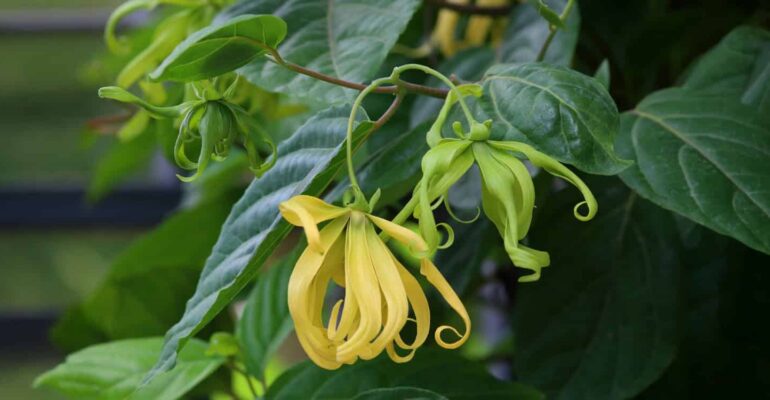
With the holy month of Ramadan less than three months away, the tradition of visiting graves has started to be observed by some members of the community. This moment is being utilized by residents of Gresik, one of the ylang-ylang flower suppliers in East Java, to increase the sales of ylang-ylang flowers as scattering flowers.
In various rice field areas and on residents’ land, ylang-ylang trees grow abundantly and provide additional income for farmers. “Income from ylang-ylang flowers is very helpful apart from farming yields,” said several local farmers.
An IPB University researcher, Prof Ani Kurniawati, explained that ylang-ylang flowers have long been known to people in various regions of Indonesia. These flowers are commonly used as scattering flowers, in religious or cultural rituals, as well as raw materials for essential oils.
“Ylang-ylang flowers also have health benefits such as being antifungal, antibacterial, and helping to relieve stress,” she said.
In addition, ylang-ylang is widely used in skincare and beauty products because of its benefits for scalp health. Demand from the cosmetics industry has continued to increase the need for ylang-ylang raw materials.
Nevertheless, Prof Ani mentioned that there are still challenges in ylang-ylang cultivation, particularly because some farmers have not fully implemented standard operating procedures (SOP) for cultivation.
The harvesting process is also an obstacle, especially for ylang-ylang trees that require climbing. However, a shrub-type ylang-ylang has now been developed, which is easier to harvest. Cultivation of this type is spread across various regions, including Blitar, Pasuruan, and Gresik in East Java, as well as Cirebon in West Java.
The development of cultivation and utilization of ylang-ylang flowers continues to be encouraged to ensure the quality of the flowers and essential oils remains maintained. Java itself was once known as a world producer of ylang-ylang oil, with Pasuruan as one of its main centers.
In its cultivation, tree-type and shrub-type ylang-ylang have different characteristics. Tree-type ylang-ylang produces larger-petaled flowers and is widely used as scattering flowers or for oil distillation.
Meanwhile, the production of shrub-type ylang-ylang is influenced by the number of productive branches, so pruning the tips becomes an important factor in increasing the harvest.
With the increasing pilgrimage activity ahead of Ramadan, farmers in Gresik hope that ylang-ylang flower sales will continue to rise and help support their family economy. (dh) (IAAS/KMR)