4,2 Million Women Farmers in Indonesia, Prof Anna Fatchiya: Agricultural Extension Must Be Gender-Responsive
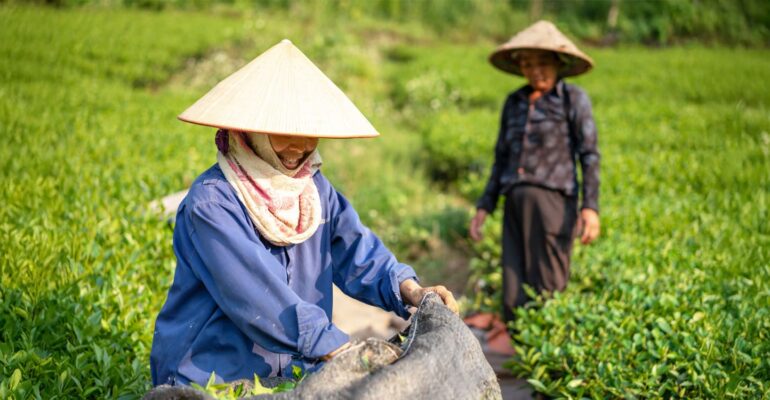
IPB University Professor from the Faculty of Human Ecology, Prof Anna Fatchiya, emphasized the importance of gender-responsive agricultural extension as a crucial strategy for achieving inclusive agricultural and rural development.
She highlighted that women play a substantial role in the food system, yet they still lack equal opportunities in terms of access, participation, and the benefits of development.
“In Indonesia, there are 4,2 million women farmers. They contribute significantly to the food system, but they continue to face inequalities in access, participation, control, and development benefits,” she stated.
According to Prof Anna, the first step is to transform existing extension approaches, which have long been predominantly masculine. Extension design must be more inclusive, friendly toward young women, and able to accommodate their aspirations and needs.
“What matters is how we integrate the aspirations and needs of young women in agriculture into the implementation of gender-responsive extension. This must start from the institutional level, from leadership to field extension officers,” she explained.
She added that gender-sensitive extension programs help women especially young women to build confidence, as many are still influenced by patriarchal cultural norms.
“Often, young women lack the confidence to speak up, and their gender awareness is low because patriarchy becomes internalized. When asked to step forward, they hold back, saying ‘let the men go first,’” she said.
Prof Anna stressed the need for dedicated spaces where women can express themselves without pressure. Women’s forums and village-level organizations can serve as platforms to strengthen their participation and leadership.
“Involving young women’s groups in village forums is highly important. When discussions are mixed, they often cannot voice their thoughts. Therefore, learning spaces for women’s leadership must be promoted systematically,” she noted.
Gen Z Can Close the Gap
When asked about the potential of Gen Z women to become drivers of agricultural innovation, Prof Anna expressed optimism. Their familiarity with digital technology can be a powerful tool to accelerate gender literacy, modern agriculture, and entrepreneurial networking.
“Gen Z lives in a digital era. Technology should be used as a contemporary medium and method to attract them to agriculture,” she said.
She added that various creative approaches can be employed, from films and social media to persuasive content, comedy, and digital games.
“Messages of equality can be delivered through films, games, or even stand-up comedy. Many Korean dramas already do this, presenting gender awareness subtly but powerfully,” she explained.
According to her, opportunities for Gen Z women to drive agricultural innovation are becoming increasingly wide open. However, success will depend on their willingness to use technology for self-development.
“The opportunities are remarkable because technology transcends geographic and gender boundaries. What matters most is the willingness to make use of it,” she concluded. (AS) (TIR/IAAS)