
Why Fertilized Chicken Eggs Are Unfit for Consumption and Prohibited from Sale? This What Experts at IPB University Said
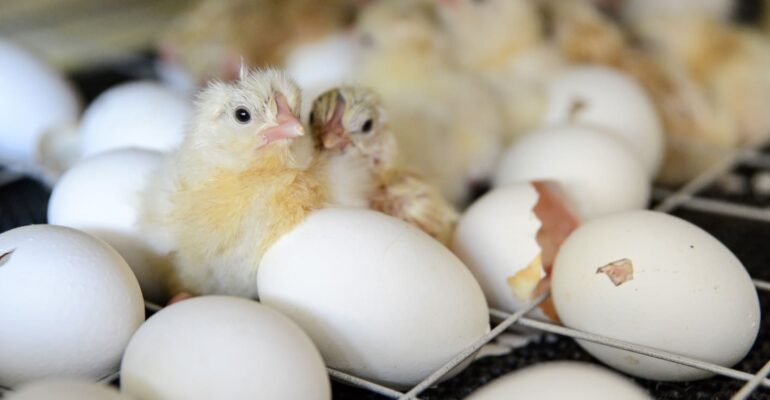
Who would have thought that not all chicken eggs are safe for public consumption? Professor Niken Ulupi, Professor of Poultry Science at IPB University, emphasized that fertilized chicken eggs are unfit for consumption and sale due to their perishable nature.
“Fertilized eggs that do not meet the requirements for hatching should not be sold in the market. They are of low quality, have a short shelf life, and are prone to spoilage,” said the lecturer from the Department of Animal Production and Technology, Faculty of Animal Science, IPB University.
Prof Niken explained that broiler chicken eggs differ from regular consumption eggs. Consumption eggs available in the market come from commercial layer chicken farms, where all chickens are female and produce infertile eggs without fertilization.
Fertilized eggs, on the other hand, are produced by female chickens fertilized by roosters, containing embryos inside. “This type of egg requires low-temperature storage. If left at room temperature, the embryo may partially develop and cause the egg to spoil quickly,” she explained.
Prof Niken noted that the purpose of raising chickens varies. Some are raised for eggs, while others are specifically bred for meat. As a result, various chicken breeds have emerged, both purebred and local.
Commercial laying hens are raised to produce eggs for consumption, while commercial broilers are raised specifically for meat. “Commercial broilers are only raised for a short period of time, around five weeks, and then slaughtered. So broilers do not lay eggs,” said Prof Niken.
Breeder broilers are raised specifically to produce fertilized eggs that are hatched into commercial broiler chicks. “These eggs are called fertilized eggs because they are produced from females that have been fertilized by males,” she said.
Although their nutritional content (especially protein and essential amino acids) is not much different, the risk of damage to fertilized eggs is higher than that of consumption eggs. Therefore, this type of egg is not intended for public consumption. In addition, Prof Niken said that the sale of eggs from the breeding industry could also disrupt the stability of consumption egg prices in the market.
As a guide, Prof Niken explained the differences between consumption eggs and fertile eggs. They can be distinguished by their shell color, shape, and markings on the shell. “This understanding is important so that the public can choose eggs that are safe, nutritious, and suitable for their intended use,” she concluded. (Fj) (IAAS/KQA)

