Ducks and Muscovy Ducks: Two Similar but Different Waterfowl
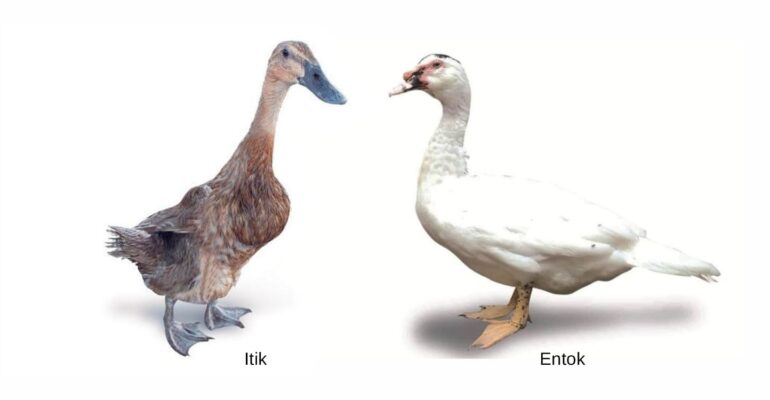
Ducks and muscovy ducks are two types of waterfowl that are widely farmed in Indonesia. Both play an important role as sources of meat and eggs for meeting the animal protein needs of the community. Although they are often considered similar, they have fundamental differences in terms of science, morphology, and production characteristics.
According to Gilang Ayuningtyas, SPt, MSi, a lecturer in the Animal Husbandry Technology and Management Program at IPB University’s Vocational School, ducks and geese belong to the same family but different genera.
“Both do indeed come from the same family, Anatidae, but they belong to different genera. Ducks belong to the genus Anas, while muscovy ducks belong to Cairina,” she explained. Therefore, ducks have the Latin name Anas platyrhynchos, while muscovy ducks are named Cairina moschata.
In terms of origin, Gilang continued, ducks are commonly found in Europe, China, and parts of Africa, while muscovy ducks originate from Central America. Now, both have become local poultry in Indonesia.
“Local Indonesian ducks include Cihateup, Alabio, Tegal, Mojosari, and Magelang ducks. Meanwhile, muscovy ducks are known to the public as Manila ducks because they entered Indonesia through the Philippines,” she explained.
The physical differences between these two birds are also quite striking. “Ducks have slender bodies, long necks, and loud voices. Meanwhile, muscovy ducks are more muscular, their heads are adorned with red bumps around the beak called caruncles, and their voices are more hoarse,” said Gilang.
In terms of behavior, ducks are known to be more alert and live in groups, while muscovy ducks are calmer and have a strong brooding instinct. Therefore, muscovy ducks are often used as brooders for duck eggs or replaced with artificial incubators.
In terms of production, ducks are superior in terms of egg production, while muscovy ducks are more prominent as meat producers. “Duck eggs have a blue-green shell with a protein content of 12-13 percent and fat content of 12-14 percent. Muscovy ducks produce fewer eggs due to their brooding nature, but their protein content can reach 14-15 percent with lower fat content,” she said.
She added that muscovy duck meat is redder because it is dominated by red meat fibers up to 75 percent. “The protein content of muscovy duck meat is around 18-20 percent, while the fat content is 3-5 percent. Duck meat is slightly fattier, but both are highly nutritious,” she said.
People also often crossbreed male ducks and female geese to produce serati or tiktok ducks. “The goal is to produce offspring with faster and more efficient growth. However, the results of this crossbreeding are sterile, so it must be repeated every time new offspring are desired,” explained Gilang.
She emphasized that the balanced development of these two types of poultry can strengthen national food security. “Ducks and geese play an important role in diversifying animal protein sources and empowering the rural economy based on Indonesia’s local poultry genetic resources,” concluded Gilang. (Fj) (IAAS/RMH)