IPB University’s PKM Group Encourages Orphans to Dream Big Through the Big Dreamers Program
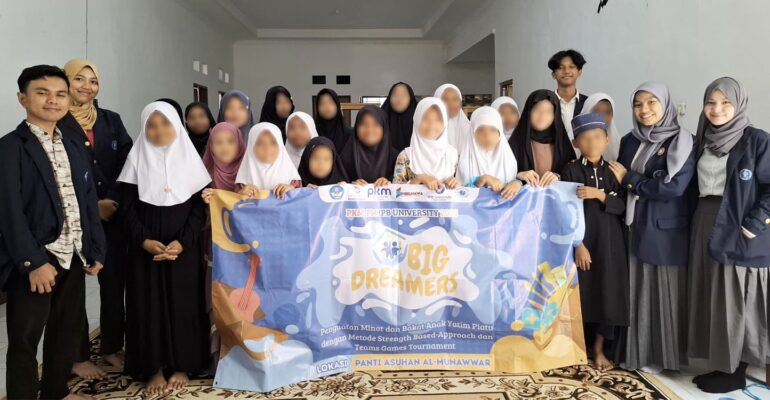
The IPB University Big Dreamers Student Creativity Program (PKM) in the field of Community Service (PM) presents an innovation in empowering orphans at the Al-Munawwar Orphanage through a combination of the Strength-Based Approach (SBA) and Teams Games Tournament (TGT).
This program not only teaches skills but also fosters self-confidence, empathy, and a collaborative spirit in children.
Big Dreamers focuses on children aged 8–12, particularly orphaned children from underprivileged backgrounds, by creating a growth space that combines two innovative approaches.
The Strength-Based Approach (SBA) emphasizes the development of individual potential and strengths, while TGT uses a cooperative learning model through team interaction, games, and tournaments that encourage active participation.
Team leader Maryam Rahma Kusuma Kamila explained that the combination of these two methods is the main feature of this program.
“With SBA, children are encouraged to deeply recognize their interests, talents, and potential. Through TGT, they are given space to develop that potential in a fun, competitive, and collaborative atmosphere,” she said.
Maryam added that Big Dreamers does not stop at the stage of recognizing one’s potential. The program also helps children hone and strengthen the skills they have discovered so that they can be continued by the orphanage administrators as long-term development.
She believes that this model is innovative because there are not many community service programs that specifically focus on developing the interests and talents of orphans with such an innovative approach.
“The positive impact of the Big Dreamers program is evident. Children who were initially passive began to show the courage to speak and express themselves in front of the group. They are more confident, actively discuss, and enthusiastically participate in every activity,” she said.
Furthermore, Maryam said that this change reflects an increase in self-confidence and the ability to work together among the participants.
During the implementation process, the children also learned the importance of empathy and support for their teammates.
“They began to see themselves not as limited individuals, but as part of a team that complements each other. This was evident from the spirit of togetherness that grew during the workshops and tournament game sessions,” said Maryam.
One of the participants, Adhitya Annisa, admitted that she gained valuable experience from this activity.
“In my opinion, this program is very beneficial, because it can be a valuable experience for me. I can play while learning about my interests,” she told the student team. (**/dr) (IAAS/KDP)