
IPB University Students Create ActivPax, a Food Preservative Made from Agar Waste and Water Hyacinth
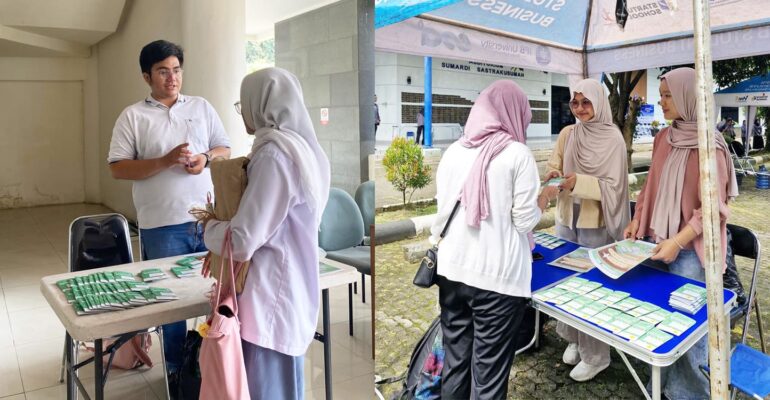
A group of students from IPB University has successfully developed ActivPax—an eco-friendly active paper innovation designed to extend the shelf life of food products. This innovative product is made from agar waste and water hyacinth.
One of the initiators, Aditya Dewanto, explained that ActivPax was inspired by concerns over Indonesia’s high levels of food loss and food waste, which are largely caused by improper food storage practices.
“Solid residues from agar processing are often discarded, even though they still contain valuable organic components such as cellulose, hemicellulose, and lignin. Meanwhile, water hyacinth, an invasive plant species, remains underutilized,” he said.
Aditya further explained that the main ingredients of ActivPax consist of cellulose fibers derived from agar industry by-products, combined with fibers from water hyacinth. The mixture is then enhanced with activated charcoal, which functions to absorb moisture and gases that cause spoilage.
“We also incorporated essential oil extracted from Coleus amboinicus leaves, known for its natural antibacterial and antioxidant properties. The combination of these materials makes ActivPax effective in maintaining the freshness and safety of food products,” said Aditya, a student of the Management Study Program at IPB University.
ActivPax is specifically designed to prolong the shelf life of perishable food items particularly fresh fish and meat, which are highly susceptible to quality deterioration caused by microbial growth during storage.
Test results show that ActivPax can extend the shelf life of products for up to seven days under chilled conditions (0–5°C) without altering their natural color, texture, or aroma.
According to Aditya, this innovation aligns with the spirit of Asta Cita, particularly in supporting national food security, promoting a sustainable green economy, and strengthening innovation-based industrialization driven by Indonesian youth.
“We hope ActivPax can serve as a tangible solution to reduce waste from the agar processing industry while creating a high-value, environmentally friendly product. Beyond that, we also aim to contribute to the goals of Asta Cita—building food self-sufficiency, strengthening a resource-based national economy, and supporting sustainable development in Indonesia,” he concluded.
Currently, ActivPax is being developed under the Student Creativity Program (PKM). The team is led by Aditya Dewanto, with members Rafi Pranaja and Zachra Lutviani (Aquatic Product Technology), Syakira Nisrina Hardianti (Nutrition Science), and Aura Ahza Hanania (Food Science and Technology). They are supervised by Prof Joko Santoso, a lecturer from the Faculty of Fisheries and Marine Science. (dh) (IAAS/TIR)

