“Aswara Ohoidertutu” Expedition: Lawalata IPB University Studies the Harmony Between Customary Traditions and Leatherback Turtle Conservation
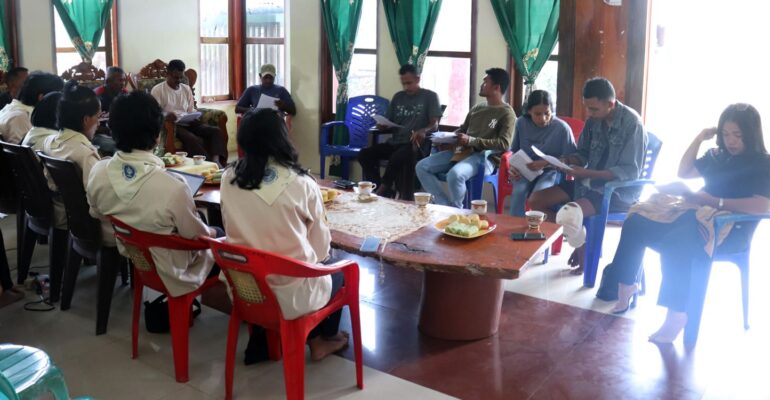
Lawalata IPB University once again reaffirmed its commitment to marine conservation and local wisdom through the Aswara Ohoidertutu Expedition in the West Kei Kecil Islands, Southeast Maluku. This activity, which took place throughout August 2025, focused on the preservation of the leatherback turtle (Dermochelys coriacea), the largest turtle species in the world that is currently endangered.
The Leader of the expedition team, Faris Makarim, explained that the name Aswara Ohoidertutu carries a profound meaning. Aswara comes from Sanskrit, meaning hidden beauty, while Ohoidertutu in the Kei language means village at the edge.
“The meaning aligns with our mission, to uncover hidden beauty, both from nature and from the culture of indigenous communities who coexist with leatherback turtles,” said Faris.
He elaborated that choosing the leatherback turtle as the main focus of the expedition was not without reason. This species has existed for millions of years and is an important symbol of Indonesia’s tropical marine ecosystem. However, its population continues to decline due to hunting, pollution, and habitat destruction.
“Of the six turtle species found in Indonesia, all are protected. The leatherback turtle was chosen for its uniqueness, it is the largest in size, has distinctive behavior, and is ecologically very important,” explained Faris.
According to him, the choice of Ohoidertutu as the location was based on two factors: ecological potential and cultural value. The area serves as an important migration route for leatherback turtles and has the traditional Tabob ritual, which regards turtles as symbols of ancestors and victory in war.
“The relationship between the Kei people and turtles has existed for a long time. Tabob is not only a tradition but also a reflection of respect for nature,” he added.
Between Tradition and Conservation
Although leatherback turtles are protected, the Kei indigenous people still hunt them as part of traditional ceremonies. This creates a dilemma between wildlife conservation and cultural respect.
As a nature enthusiast, Faris believes that the approach to indigenous communities should not be repressive. “Indigenous people have value systems that existed long before conservation regulations were established. Therefore, the approach should not be about prohibition but education and finding a middle ground,” he said.
Through this expedition, the findings gathered by the Lawalata IPB University team will be submitted to the Tourism Office and the Marine and Fisheries Office of Southeast Maluku as policy recommendations.
The Ohoidertutu area is now gaining recognition as a tourist attraction, which certainly opens economic opportunities for the community. However, Faris and the expedition team emphasize an important note. “Ecotourism can be a solution but also a threat. If it is not managed properly, it can damage the environment and turtle habitats. Therefore, education becomes the main key,” he stressed.
Faris hopes the results of this expedition can serve as an initial foundation for developing conservation policies that support both environmental and cultural sustainability. He stated that synergy among the government, indigenous communities, and academic institutions is crucial to achieve equitable conservation.
This expedition is part of Lawalata IPB University’s annual program that integrates socio-ecological research, nature conservation, and coastal community empowerment. Through this activity, IPB University students strive to present a scientific approach rooted in local values to achieve sustainable and inclusive marine conservation.
“Aswara means hidden beauty. That beauty is not only about the sea, but also about how humans and nature can coexist in mutual respect,” he concluded. (AS)(IAAS/RSL)