
IPB University Students Create Eco-Friendly Anti-Aging Masks from Milk Processing Waste
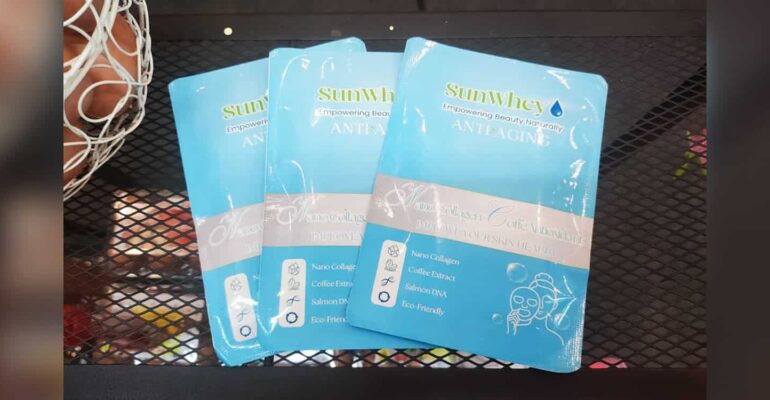
The trend of natural skin care is now increasingly popular. Amidst the proliferation of imported products, IPB University students have come up with an innovative face mask made from an unusual ingredient: milk processing waste.
Through the Student Creativity Program (PKM), they developed a product named SunWhey: A Sheet Mask Based on Nata de Whey with High Nano Collagen and Antioxidants as an Anti-Aging Solution.
The team is led by Riandri Pasccal Saputra (Animal Product Technology) together with Ahmad Andra Ramawan and Arya Wijaya (Agribusiness), Yuni Rahmah Armeliyah (Physics), and Kadisha Azka Fajriani (Chemistry), under the guidance of Prof Irma Isnafia Arief.
According to Riandri, the idea for SunWhey was born out of concern for the large amount of high-value food waste that has not been optimally utilized.
“We saw a lot of by-products that are actually rich in benefits — such as whey from milk processing, chicken feet rich in collagen, and coffee grounds high in antioxidants. We combined all these ingredients into a natural anti-aging mask,” he said.
The SunWhey product combines nata de whey, which is whey fermented by Acetobacter xylinum bacteria, as the base ingredient for the mask, nano collagen from broiler chicken feet that is easily absorbed by the skin, and robust coffee grounds extract that is high in polyphenols and caffeine. This combination works to maintain skin elasticity, reduce free radicals, and prevent premature aging.
“Nata de whey contains bacterial cellulose fibers that are soft, flexible, transparent, and biodegradable. In addition to being a natural gel, its whey protein and mineral content also have a moisturizing effect and help collagen absorption into the skin,” explained Riandri.
Quality tests show that the SunWhey mask has high antioxidant activity, is commercially viable, and is sold at an affordable price of Rp30.000 per 72 grams. From a business perspective, the team considers this product to be promising because it utilizes food waste and is environmentally friendly.
More than just cosmetics, this innovation serves as a concrete example of how IPB University students apply science to create sustainable solutions that are both economically valuable and environmentally friendly.
“We want to show that innovation can emerge from materials often considered waste,” concluded Riandri. (dh)(IAAS/KDP)

