The Economic Benefits and Value of Earthworms According to IPB University Experts
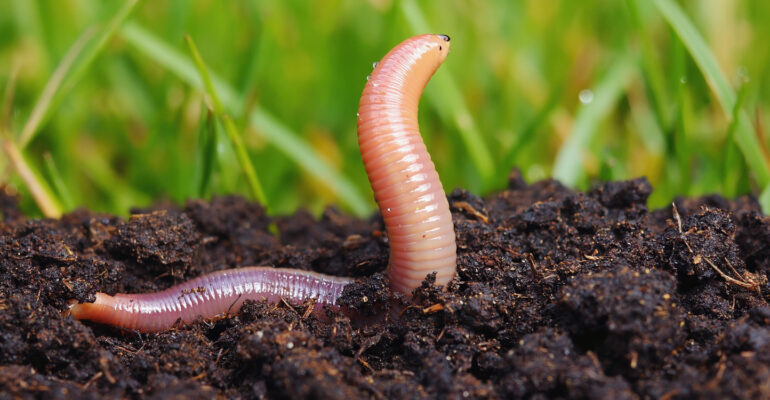
Earthworms have high economic value thanks to their various benefits. This was revealed by Ir Tri Heru Widarto, MSc, a lecturer at the Department of Biology, IPB University, in a written interview with IPB Today.
According to Tri Heru, earthworms not only play an important role in improving soil fertility through their biological activities and nutrient-rich excrement, but also have great potential in other fields such as animal husbandry, pharmaceuticals, and waste management.
“Earthworms are rich in protein, making them ideal as natural feed for livestock such as chickens, ducks, fish, shrimp, and birds. This could be an alternative to reduce the cost of conventional feed,” he explained.
Furthermore, he added that some types of earthworms, such as Lumbricus rubellus, contain fibrinolytic enzymes (lumbrokinase) that are beneficial in improving blood circulation, preventing clotting, and have potential for the treatment of stroke and heart disease.
“Earthworm extract has long been used traditionally as a fever reducer for typhoid, although this benefit still requires further scientific evidence,” he added.
He said that earthworms are being further researched for applications in the pharmaceutical and cosmetic industries. In addition, earthworms also have benefits as organic waste processors. With their ability to degrade waste such as household waste, agricultural waste, and livestock manure, worms help produce high-quality compost and reduce environmental pollution.
Several types of earthworms that are popularly cultivated for their economic value include Lumbricus rubellus, Eisenia fetida (red worms), and Perionyx excavatus (necklace worms). All three are known for their high composting ability and as a source of livestock feed.
Regarding worm farming or vermiculture, Tri Heru explained that the process is relatively easy and does not require a large area of land. The process includes preparing organic media, cultivation containers, spreading seeds, feeding, media maintenance, and harvesting, which can be done within 2-3 months.
“The business potential of earthworms is increasingly attracting public attention. Their wide-ranging benefits across various sectors have driven the growth of earthworm farming businesses in Indonesia. With educational support and government backing, the opportunities in this industry remain wide open,” concluded Tri Heru. (dh) (IAAS/KDP)