IPB University Expert Reveals Great Potential of Daun Dewa as a Leading Herbal Commodity
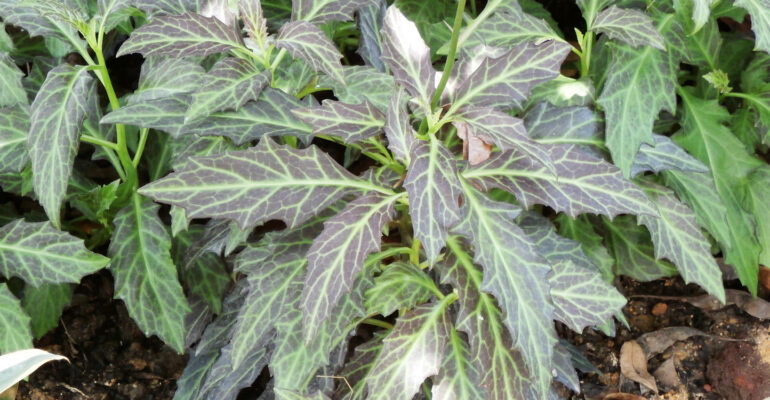
Prof Sandra Arifin Aziz, a Professor at the Faculty of Agriculture, IPB University, emphasized that daun dewa (Gynura pseudochina) has enormous potential to become one of Indonesia’s leading herbal commodities.
According to her, as a plant native to Indonesia and Southeast Asia, daun dewa is already well-adapted to tropical environments, making its cultivation easier compared to introduced herbal plants from abroad.
“If a plant originates from that region, it means it is already suitable for that place. For medicinal plants, this is highly advantageous,” said Prof Sandra.
She explained that daun dewa is known for its various benefits, including being anti-cancer, anti-inflammatory, reducing blood pressure, controlling blood sugar, treating stroke, and healing wounds.
In Southern China, this plant is known as Samchit and is consumed according to traditional rules, such as three leaves for seven days or seven leaves for three days to relieve coughs.
Although its benefits have been trusted for generations, Prof. Sandra stressed that herbal processing must be done properly to preserve its active compounds.
“The best way is always fresh, chewed directly. If that’s not possible, it can be steamed, boiled, or dried. However, fresh vegetables and fruits are still better than those already processed,” she said when asked about the best way to consume daun dewa.
She also revealed that industrial-scale production requires planting in large quantities, especially if extraction is carried out to produce ready-to-consume herbal products like tea or capsules. In this process, plants with higher levels of active compounds are needed.
To date, research on daun dewa at IPB University has only reached the cultivation and bioactive content analysis stages, such as total flavonoids, alkaloids, and terpenoids. The formulation of standardized herbal medicines or phytopharmaca from daun dewa has not yet reached the clinical trial stage.
“As for cultivation, I have been working on it for more than ten years. But for drug formulation, that is usually done at the Tropical Biopharmaca Study Center,” said Prof Sandra.
According to her, the cultivation technique for daun dewa is relatively simple. This perennial plant can be propagated by stem cuttings or tubers and can be harvested after six months. “Just cut the stem, make sure there are stem nodes in the soil. New shoots will grow from there,” she explained.
Although scientific research on daun dewa is still ongoing, Prof Sandra is optimistic that this plant has a bright future in the development of Indonesian herbal medicine. “We have known its benefits since ancient times. Now it’s a matter of how we cultivate, standardize, and process it into safe and tested products,” she said. (dr) (IAAS/KMR)