Not Just for Health, IPB University Researchers Reveal the Potential of Javanese Ginseng for the Cosmetics Industry
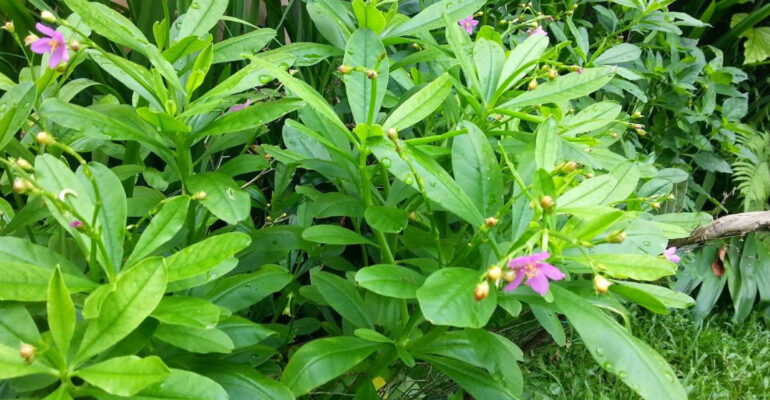
Indonesia has a herbal plant that resembles Korean ginseng, namely Javanese ginseng (Talinum paniculatum). This plant grows wild in tropical regions, including Indonesia, and belongs to the Talinaceae family. Although its root structure and morphology are similar, it differs in species and genus from Korean ginseng, which belongs to the Araliaceae family.
According to IPB University researcher Dr Rini Madyastuti Purwono, several studies indicate that Java ginseng has pharmacological activities such as aiding in diabetes management, acting as an immunomodulator, reducing skin inflammation, addressing gastrointestinal and reproductive disorders, and having anti-stress properties.
“Phytochemical analysis results indicate that Javanese ginseng contains flavonoids, saponins, and terpenoids common metabolites found in various plants,” said the lecturer from the School of Veterinary Medicine and Biomedical Sciences (SKHB) at IPB University.
However, unlike Korean ginseng, Javanese ginseng does not contain ginsenosides, the characteristic active compounds found in Korean and Chinese ginseng. Ginsenosides are saponin derivatives with strong pharmacological effects in Korean ginseng, and these compounds are not found in Java ginseng.
She explained that based on Gas Chromatography-Mass Spectrometry (GC-MS) laboratory tests, Java ginseng was found to contain the highest levels of phytol and hexadecanoic acid.
“Hexadecanoic acid is commonly used as an ingredient in soap and skin moisturizers, opening up opportunities for the development of Javanese ginseng in the cosmetics industry,” Dr Rini revealed.
Meanwhile, she continued, the benefits of phytol are still rarely discussed. Some studies suggest that this compound can be used as an additive in perfumes and may have certain health effects, such as helping to inhibit inflammation or acting as an antioxidant.
One of the advantages of Java ginseng is its higher safety profile compared to Korean ginseng. Dr Rini explained that Korean ginseng should be consumed with caution by those with hypertension, insomnia, or heart conditions. Especially for those taking blood-thinning medications like aspirin, as it carries a risk of causing bleeding.
“The effects of ginsenosides in Korean ginseng are very strong, so its use should be under medical supervision. On the other hand, Javanese ginseng, which contains common secondary metabolites, is relatively safer to consume, whether in the form of tea or capsules,” she explained.
Currently, research conducted on Javanese ginseng includes measurements of antioxidant capacity, analgesic, anti-inflammatory, and immunomodulatory effects. However, according to Dr Rini, the development of its potential is still considered limited due to its common active ingredients. (AS) (IAAS/STD)