IPB University Expert Reveals Another Side of Honey Bees: Natural Detectors of Environmental Pollution
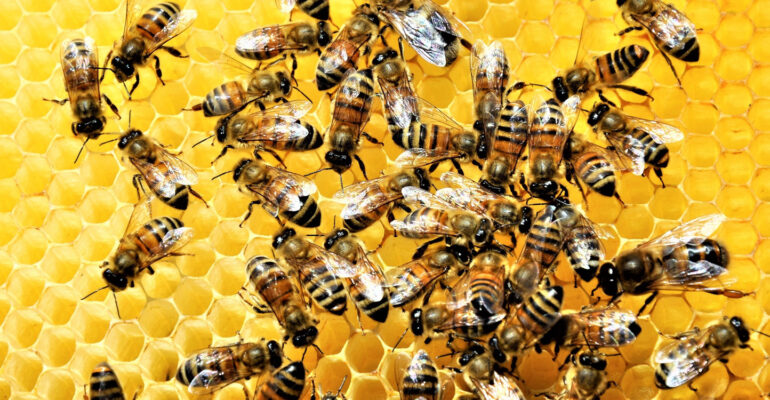
Professor of Biology at IPB University, Prof Dr Rika Raffiudin, revealed that honey bees have great potential as bioindicators or natural “detectors” of environmental health.
“Honeybees can detect pollution through various biological indicators,” she said in an interview regarding the important role of bees in ecosystems and their response to environmental changes, (8/11).
When the environment is polluted, honeybees can exhibit several observable changes. One of the most obvious signs is an increase in the number of bees dying after consuming harmful molecules from the air or surrounding plants.
“Other bioindicators include the melting of part of the hive wax as a sign of prolonged temperature increases, the presence of pesticides and heavy metals in honey or other bee products, and a decrease in colony size,” she explained
According to Prof Rika, honeybees are one of the most remarkable creatures. They live in organized colonies, and their cooperation among individuals serves as an inspiration for humans.
In addition to producing valuable products such as honey, wax, royal jelly, pollen, propolis, and bee venom, honeybees also play a crucial role as primary pollinators, enhancing the productivity of various horticultural plants.
However, she noted that urbanization and increasing pollution have disrupted ecosystem balance, including the presence of pollinators like bees. Therefore, she emphasized the importance of bees as bioindicators for measuring environmental degradation, climate change, and the impacts of global warming.
“Research by Duque and Steffan-Dewenter published in Frontiers in Ecology and the Environment shows that atmospheric pollutants, including motor vehicle emissions, can disrupt bees’ ability to recognize volatile organic compounds (VOCs) from flowers,” she explained.
VOCs are an important component in ecological interactions between insects and plants. Through olfactory conditioning tests, bees were trained to recognize VOC profiles such as linalool, dipentene, myrcene, and geraniol. The results showed that bees took longer to recognize VOCs contaminated by exhaust emissions and also forgot them more quickly.
“Air pollution has been proven to alter bees’ recognition and memory of floral VOCs, which could ultimately reduce their efficiency in foraging for nectar and pollen,” she explained.
This research reinforces the role of honeybees as natural environmental monitoring tools, while also highlighting the importance of maintaining air quality and the natural habitats of pollinating insects. (dh) (IAAS/ASY)