IPB University Professor: Decline in Poverty Rate Released by BPS Does Not Reflect Reality
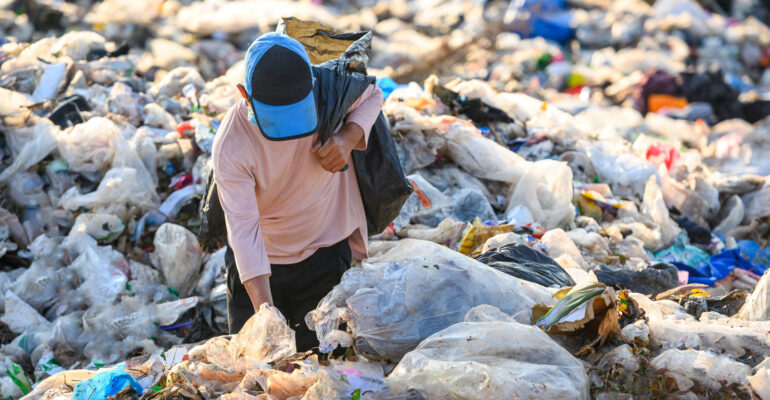
The recent decline in poverty rates released by the Central Statistics Agency (BPS) has drawn attention. Several experts believe the data does not fully reflect the actual conditions faced by the public, especially amid economic pressures caused by waves of layoffs (PHK) and a continuously weakening purchasing power.
A similar assessment comes from Professor Ali Khomsan of the Faculty of Human Ecology (FEMA) at IPB University. He notes that the public is still facing difficult living conditions amid increasingly severe economic pressures.
“The wave of layoffs across various sectors indicates that household economic conditions are currently under serious pressure, particularly in urban areas,” he stated.
Prof Ali explained that the clear definition and measurement of the poverty line used by the Central Statistics Agency (BPS) are key in determining the national poverty rate. Currently, the poverty line is set at around Rp600.000 per capita per month. However, this figure is considered lower compared to international standards.
“If using the World Bank’s standard of two US dollars per day, even for middle-income countries the poverty line is higher at around eight US dollars, then the number of poor people in Indonesia would be far higher than what is currently known. This is significantly different from the BPS’s claims,” he explained.
He hopes that in the future, the government will set a more logical poverty line that reflects the needs for a decent standard of living. This includes expenditures on food that meets nutritional adequacy, as well as non-food needs such as clothing, housing, and other basic necessities.
Prof Ali also highlighted the labor conditions in urban areas, where some workers still receive wages below the regional minimum wage (UMR).
In rural areas, despite a lower poverty line, communities can still survive by utilizing local natural resources. “Nevertheless, they still live in poverty. However, since they can access nature, their food needs are relatively met even without a steady income,” he concluded. (AS) (IAAS/EXC)