IPB University Biofarmaka Expert Reveals the Benefits of Tempuyung, Ranging from Kidney Stone Dissolver, Antioxidant, to Anti-inflammatory
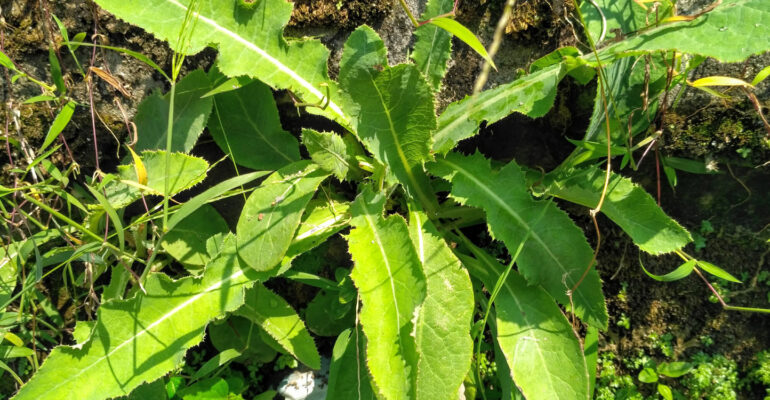
Tempuyung (Sonchus arvensis L.) has great potential in traditional medicine with various health benefits. Based on scientific research and traditional usage, tempuyung is known as a kidney stone dissolver and there are already commercial products available.
This was conveyed by Prof Mohamad Rafi, an expert in Biofarmaka, Analytical Separation, and Metabolomics at IPB University. He explained, “Its ability as a kidney stone dissolver is due to this plant’s potassium and flavonoid content.”
“The potassium and flavonoid content plays a role in helping to dissolve kidney stones and increasing urine excretion. Its diuretic effect also helps reduce mineral buildup in the kidneys,” he said.
In addition to its potential as a kidney stone dissolver, tempuyung has potential as an antioxidant due to its flavonoid content, which acts as a natural antioxidant. These compounds can help counteract free radicals and potentially prevent cell damage and premature aging.
He added that tempuyung also has potential as an anti-inflammatory. Several studies have reported that tempuyung leaf extract has activity in inhibiting inflammation, making it relevant for use in treating joint pain, wounds, or mild inflammatory disorders.
Research by one of the researchers at the Tropical Biopharmaca Research Center (TropBRC) IPB University, Prof Dyah Iswantini, has also utilized tempuyung extract as one of the components in herbal medicine formulas for antigout (uric acid medicine) and antihypertensive treatments, making use of its diuretic and anti-inflammatory properties.
Other studies show that tempuyung also has the ability to lower cholesterol levels, with the active compound β-sitosterol playing a role in its mechanism. Additionally, tempuyung has potential as a natural ingredient for treating mild infections due to its antibacterial and antifungal activity.
“The potential of the tempuyung plant is very significant. However, challenges in standardization and valid clinical evidence remain the main obstacles to its development as an evidence-based phytopharmaceutical,” she revealed.
She explained that tempuyung contains many chemical compounds from the flavonoid group such as luteolin, apigenin, and quercetin, as well as sesquiterpenoid and phenolic compounds, and a high level of potassium.
“From an analytical chemistry perspective, quantitative testing has been done using high-performance liquid chromatography for flavonoid analysis, UV-Vis spectrophotometry to determine total phenolic and flavonoid content, and AAS or ICP-OES for potassium content in tempuyung,” she explained.
Although it has already been used in standardized herbal medicine products for kidney stone dissolvers and is also in the development stage as an antihypertensive and antigout herbal medicine product at TropBRC IPB University, Prof Rafi revealed the main obstacles in developing tempuyung-based herbal medicines.
“The availability of quantitative data and the standardization of raw materials or finished products is still limited and not always consistent across studies or tests,” he explained.
Variations in growth conditions, post-harvest handling, and extraction processes are mentioned as factors causing inconsistency in active compound content. Ultimately, this affects the correlation between dosage and clinical effects. Although in vitro and in vivo tests have been conducted, clinical trial data in humans is still very limited.
According to Prof Rafi, several major challenges that must be addressed to make tempuyung a phytopharmaceutical include raw material variability, lack of extract standards, limitations in clinical trials, and suboptimal regulatory support.
“Not all producers have standardized extracts, for example minimum levels of luteolin or potassium,” he said. He also emphasized the need for synergy between government, academia, and industry to strengthen research on local plants.
Furthermore, Prof Rafi explained that using chemometric applications with a metabolomic approach can be an alternative in the process of quality assurance and consistency of tempuyung products. For example, in authenticating raw materials, identifying bioactive compounds to become marker compounds, and so on.
“For example, chemometric analysis such as principal component analysis is used to distinguish tempuyung extracts from lowland versus highland areas based on LC-MS/MS profiles. This helps maintain product reproducibility,” he said.
Comprehensive metabolomic analysis using LC-MS or NMR can also monitor biomarkers and produce chemical fingerprints that are used as quality standards.
He also highlighted the importance of simple yet effective analytical methods to avoid adulteration of herbal raw materials. FTIR spectroscopy combined with chemometrics can detect the authenticity of materials without destroying samples. Meanwhile, thin-layer chromatography-densitometry is useful for detecting marker flavonoids such as luteolin.
“With its great potential, tempuyung still requires in-depth research support, comprehensive standardization, and strong clinical validation to develop into Indonesia’s flagship phytopharmaceutical,” he concluded. (Fj) (IAAS/EXC)