Professor of IPB University’s Faculty of Agriculture: Ginger Emprit, the Spicy Little One for Herbal Industry
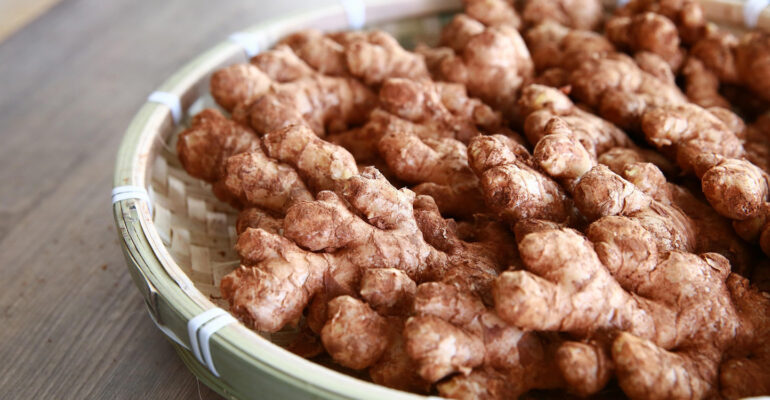
Behind its tiny form, emprit ginger (Zingiber officinale var. amarum) holds great potential for the development of the traditional medicine industry in Indonesia. The ginger variety, known for its small but spicy rhizome, has attracted the attention of academics and the herbal industry.
Professor of the Faculty of Agriculture at IPB University, Prof Sandra Arifin Aziz, said that emprit ginger has unique characteristics that distinguish it from red ginger and elephant ginger.
“Emprit ginger is pale yellow in color, small and hard. Its spicy flavor is the strongest among other types of ginger,” she said. She added that the content of bioactive substances in emprit ginger such as gingerol and essential oil is very high, making it superior for traditional medicine and herbal medicine processing.
Compared to red ginger, which also has a spicy flavor and is high in gingerol, emprit ginger is more commonly chosen for its hardness and stability. Meanwhile, elephant ginger tends to be used for fresh consumption because of its large texture and softer flavor.
Furthermore, Prof Sandra said that emprit ginger is a strategic commodity that has great potential to be developed nationally. This cannot be separated from its bioactive content that is efficacious as anti-inflammatory, antioxidant, and immunostimulant.
“Demand for herbal products, both local and export, continues to increase, especially after the COVID-19 pandemic. Ginger emprit can be the main ingredient for liquid herbal medicine, capsule extracts, and instant drinks,” she said.
Ginger emprit is also suitable for planting in various regions, including suboptimal land. This advantage opens up opportunities for local farmers to be involved in the supply chain of the high-value herbal medicine industry.
Not only for the industry, people can also utilize ginger emprit as part of a healthy lifestyle. Prof Sandra suggests consuming emprit ginger regularly but not excessively.
“It can be brewed as a herbal drink with hot water, added with honey or lime. Ginger is also good to be mixed in home-made herbal medicine with ginger or turmeric,” she added.
However, she cautioned that people with ulcers or low blood pressure should consult before consuming it regularly. The use of emprit ginger as a spice or infusion drink can also help warm the body and facilitate digestion.
With all its benefits, Prof Sandra explained that the development of ginger emprit needs to be supported across sectors, from upstream to downstream, in order to become the backbone of Indonesia’s herbal industry based on local biological wealth. (dr) (IAAS/PRO)