
Pho Is More than just a Vietnamese Specialty
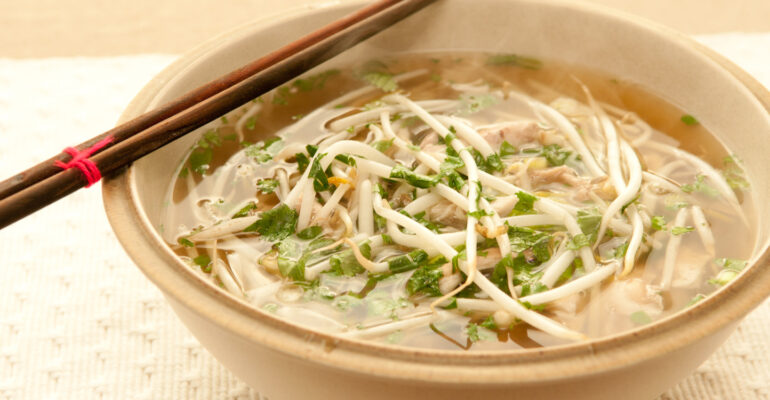
If the world knows fried rice as a specialty of Indonesia, then the world also knows Pho (pronounced Fuh) as one of Vietnam’s specialties.
For those who are unfamiliar with it, Pho can generally be described as noodles in broth with vegetables and meat toppings. The taste is very distinctive because the way it is made is different from the noodle soups we are familiar with. The meat toppings can vary, including beef and duck meat.
Outside of Vietnam, Pho is already recognized as one of the signature dishes with a significant following. As a result, this dish is widely available in major cities around the world.
Fusion Cuisine
If examined more closely, traditionally, Vietnamese people did not consume beef. However, with the arrival of the French in the mid-19th century, who also colonized Vietnam, Vietnamese people gradually began to consume beef.
Traditionally, cattle and buffalo were already familiar to the Vietnamese people. However, their primary purpose was for labor in plowing fields, not for meat production. The arrival of the French also led the Vietnamese to begin raising cattle as a source of meat to supplement their protein intake alongside chicken, duck, and pork.
Over time, after the French arrived, the Vietnamese people began to know Banh Mie, which later evolved into Pho. In fact, Pho was created from the fusion of French cuisine and traditional Vietnamese cuisine. Scientists and culinary enthusiasts mention that the name Pho comes from the French term pot-au-feu, which means ‘pot on the fire’ or stew.
The French who settled in Vietnam at the time were already accustomed to consuming meat as part of their daily diet. In the preparation of French cuisine, there were parts of beef that were not suitable for consumption, and it was these parts that began to be used to make the Pho broth we know today.
Pho has a distinctive flavor because it is a blend of beef broth and spices such as star anise, cinnamon, coriander seeds, and black cardamom. In its presentation, fresh coriander leaves are added, enhancing the uniqueness and freshness of Pho’s flavor. Additionally, the serving of Pho is adorned with slices of Vietnamese herbs, red onions, and fresh chili peppers, which further enhance its distinctive flavor.
Historical Turmoil Shapes the Flavor
In its historical journey, Vietnam was divided into two regions with different rulers in 1954: the northern region under communist rule and the southern region under anti-communist rule.
The cultural differences between the North and South have also influenced the taste of pho in both regions to this day. Southern pho is sweeter, stronger, and fattier. Northern pho, on the other hand, is simpler, milder, and lighter with fewer toppings. The northern region, with its capital Hanoi, is where the popularity of pho originated and spread worldwide.
The political turmoil in Vietnam in 1954 led to a civil war that also involved the United States. During this turbulent era, many people from North Vietnam fled to South Vietnam, primarily to Saigon, now known as Ho Chi Minh City. This migration caused pho to begin spreading to the southern region, eventually becoming the iconic Vietnamese dish known worldwide.
The culinary preferences of people in Northern and Southern Vietnam still result in differences in the flavor of the Pho they produce. In the North, Pho is typically consumed as breakfast in smaller portions. In the South, Pho is enjoyed throughout the day in larger portions with a more diverse mix of ingredients.
These differences result in Pho from the southern region tasting sweeter, stronger, and fattier, and is typically served with additional sprouts, basil leaves, mint leaves, and cilantro leaves.
This is undoubtedly due to the more fertile soil in the southern region, which allows for the cultivation of a wider variety of plants and herbs. Pho from the northern region is typically served with lime, jalapeño peppers, and lime leaves, giving it a more distinctive flavor compared to Pho from the southern region.
History also notes that the Vietnam War, which ended in 1975, led to pho spreading worldwide alongside the migration of Vietnamese refugees to various parts of the world, such as France, the United States, Australia, the United Kingdom, and others. Today, in many countries, Vietnamese restaurants are not just restaurants but also gathering places for the diaspora to enjoy traditional Vietnamese cuisine.
The peak of Pho’s popularity occurred in 2024 when the Vietnamese government declared it as national cuisine and an intangible cultural heritage recognized by the United Nations Educational, Scientific and Cultural Organization (UNESCO). This recognition is also part of the country’s long historical journey, including the civil war it experienced. With Pho being declared as intangible cultural heritage, Hanoi is known as the birthplace of Pho.
Pho, now known worldwide, is not merely a Vietnamese specialty but also plays a significant role in uniting the Vietnamese people. Today, Pho, a source of pride for the Vietnamese people, has transcended ideological, political, and national boundaries, becoming one of the world’s most recognized dishes that embodies the soul and essence of Vietnam.
By: Prof Ronny Rachman Noor
Professor of Genetics and Animal Breeding
Faculty of Animal Science, IPB

