Australian Meat Dominance Amid Tariff War
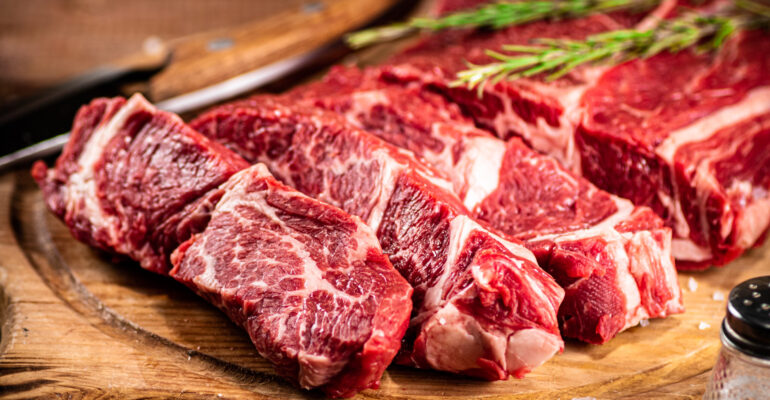
 Australia’s presence at this week’s food trade show in Shanghai, attended by 70 countries, proves Australia’s dominance as a global meat supplier cannot be ignored and reaffirms that Australia now dominates China’s premium beef market.
Australia is the world’s number 2 beef supplier of Brazil followed by the United States, India and Argentina while the world’s top live cattle exporting countries are France, Canada and Mexico. Australia is also the leading exporter of beef and live cattle to Indonesia.
The growing importance of Australian beef to the world, especially China, is due to the removal of American beef from the trade due to the unresolved tariff war with China.
US beef trade to China has reached US$2,5 billion. This void in American beef supply is being smartly utilized by Australia to increase its dominance. With an average supply of 20.,000 tons per year, China is an important market for Australian meat.
Australia’s Meat Dominance
In 2024, Australia produced more beef than ever before, producing 2,57 million tons of beef, 1,34 million tons of which was exported worldwide.
Australia is also the largest exporter of beef and live cattle to Indonesia. Australia’s beef imports to Indonesia continue to rise, outpacing live exports for the first time in decades.
The value of Australian beef exports to Indonesia is increasing significantly, with Indonesian imports of Australian beef increasing by 45% by 2023. In addition, Australia remains a major exporter of live cattle to Indonesia, with more than half of Australia’s live cattle exports in 2023 destined for Indonesia.
This trend of Australian meat and live cattle dominance is expected to increase sharply from 2024 due to the need for meat for the MBG program that has begun.
To give you an idea of the magnitude of Australia’s meat flow to the world including Indonesia, this week’s Australian Bureau of Statistics (ABS) data shows that in the first quarter of 2025 alone 2,2 million head of cattle were slaughtered which represents a 20% increase compared to the same quarter last year.
The booming demand for Australian meat in the midst of the US-China tariff war is indeed an opportunity for Australia to extend its meat dominance, but the trade war may lead to a slowdown in the world economy which in turn will reduce demand and affect Australia’s meat absorption capacity.
Australia’s ability and capacity to supply meat to the world is undoubtedly supported by vast farmland, a large number of cattle and adequate supporting infrastructure.
As an illustration, there are two systems of meat cattle farming in Australia, namely the extensive system, where cattle are grazed with feed relying on natural grass and the intensive system where cattle are fattened by relying on concentrated feed from grains.
In April 2025 alone Australia exported over 3.000 tons of grain-fed beef. This was an unprecedented record and a third of this meat supply went to China.
In the midst of this Australian meat dominance, President Trump has imposed a 10% tariff on Australian imports, including meat, which will certainly affect Australian meat exports to America, which amount to US$3 billion.
The ongoing trade war also shows that the world is now entering an era of economic “statecraft” that has left the era of global trade towards the policies of each country that prioritize national security and national interests.
This means that Australia will inevitably have to negotiate trade with the US under the Trump administration. This is considered very important because the Australian economy is not only related to bilateral affairs, but will also affect other countries that are not in line with America.
If the trade war between the US and China continues, it will certainly affect the fate of Australian meat exports, which is not impossible to shake the dominance of Australian meat.
By: Prof Ronny Rachman Noor
Professor of Genetics and Animal Breeding
Faculty of Animal Science, IPB (IAAS/KDP)