Researchers of IPB Used Java Chili for Synodontist Fishing
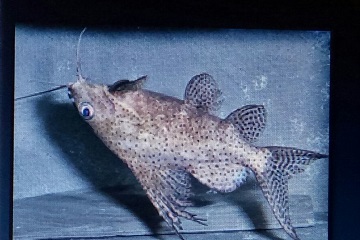
Synodontist eupterus was a freshwater ornamental fish originating from the river of Niger, Africa. This fish was widely produced in Indonesia to meet the local demand and the export. However, the production was limited due to the low population of the male synodontist. The male synodontist was only about 5-10 percent of the total synodontist production of the farmers, which limited the availability of males for the reproductive purposes.
To overcome the low population of males could be done with the masculinity or masculinization. The hormone of 17α-methyltestosterone (MT) which commonly was used for its use of masculinization was limited by the government, because it was not easy to decompose, it was carcinogenic and polluted the surrounding environment. For that reason, it was required the hormone from the natural material which was safe and did not cause the environmental damage.
Four researchers from the Department of Aquaculture, Faculty of Fisheries and Marine Science (FPIK), Bogor Agricultural University (IPB), namely Dinar Tri Soelistyowati, Prassetyo Dwi Dhany Wijaya, Muhammad Zairin Jr, and Widanarni, conducted the research of the masculinization of the synodontist fish larvae using the extract of Java chili (Piper retrofractum).
“The steroids as the sex hormones derived from the plants, commonly are referred to as the fitosteroids. The fitosteroids which help in differentiation, the formation of the male sex and the secondary sex characteristics known as the phytoandrogens. Java chili is called a plant which is widely used in Indonesian traditional medicine. This research aims to evaluate the effect of Java chili extract by the immersion in the synodontist fish larvae,” said Dinar.
In the experiment, this research team used a 10-day-old synodontist fish larvae with each replication of 100 fish. The treatments given were the immersion of 17α-methyltestosterone 2 mg L-1 (MT) for 5 and 10 hours; the immersion of Java chili extract (ECJ) of the dose of 0.125 mg mg/L (P1) for 5 and 10 hours; and the dose of 0.25 mg mg/L (P2) of the immersion for 5 and 10 hours compared with the control treatment without the immersion.
The result of this research indicated that the treatment of ECJ resulted in 25-40 percent of the male fish aged four months; 1-2 percent of the female and above 60 percent of the intersex. While at the age of five months, the percentage of the intersex fish fell to 20-40 percent; the female fish increased to 60-62 percent; and the male fish was around 20-35 percent in ECJ compared to the control of P0 (15%). At the dose (ECJ) of 0.25 mg mg/L increased the mortality rate by approximately 14-54 percent.
The research team concluded that the masculinization of the synodontist fish in the larval phase using the Java chili extract through the immersion with a dose of 0.125 mg mg/L and 0.25 mg mg/L might increase twice the percentage of the male fish compared with the control. “The Java chili extract affects the fish survival rate and the treatment of 0.125 mg/L which results the highest survival rate, that is 97.67 percent. Increased dosage of Java chili extract can decrease the fish survival rate,” she said.(IR/nm)