
IPB Researchers Find Agent Hayati from Brotowali
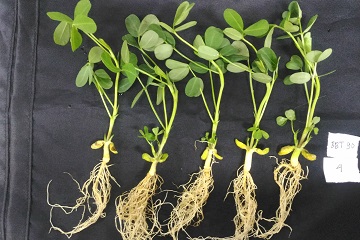
A team of researchers from the Department of Plant Protection, Faculty of Agriculture, Bogor Agricultural University (IPB), Dr. Ir. Abdul Munif, M.Sc.Agr and Kholil Ma'ruf conducted research on the utilization of biological agents in the form of endophytic bacteria in the control of disease in peanut.
Peanut is one of the food crops that have high economic value. Indonesian people’s total consumption of peanuts for is also quite high. However, the last few years peanut production in Indonesia has decreased due to disturbance of plant disturbing organisms (OPT). This can cause considerable losses because it can decrease the quantity and quality of peanuts. One of the pests that become obstacles and become the main pest in peanut is Sclerotium rolfsii pathogens (soil contagious fungi). These pathogens can cause seedling sagging and stem rot at peanuts. One way that can be used to control these pathogens is by utilizing biological agents, such as bacteria, fungi, viruses, nematodes, and actinomycetes bacteria.
"Endophytic bacteria are widely used in pathogen control because they are capable of producing secondary metabolites such as salicylic acid, siderophores, and cyanide acids capable of suppressing the growth of pathogens. In addition, endophytic bacteria also produce growth hormones such as auxin, gibberellin, cytokines, and abscisic acid, and produce hydrolyzing enzymes such as chitinases, proteases, cellulases, lipases, and pectinases. Endophytic bacteria can be isolated one of them from brotowali plants that belong to traditional medicinal plants, "said Dr. Abdul Munif.
The results showed that endophytic bacteria were isolated from the roots and stems of the brotowali plant as a biocontrol agent of Sclerotium rolfsii (soil-borne fungus). There were seven potential isolates capable of suppressing soil infected fungi. The seven isolates were coded BBT25, BBT90, BBT102, BBT106, BBT110, and BSKI18. BBT110 and BSK18 isolates were able to inhibit the progression of the severity of stem rot disease caused by soil-borne fungi. The application of endophytic bacteria is also able to increase the growth of peanuts, but it can also dissolve phosphate, produce chitinase, protease, cellulase, catalase, HCN (cyanide acid), and volatile organic compounds that can inhibit the development of Sclerotium rolfsii (soil-borne fungi). (flw)

