IPB Experts Conducted a Research on the Palm Stalk Leaves as a Feed for Dairy Cattle
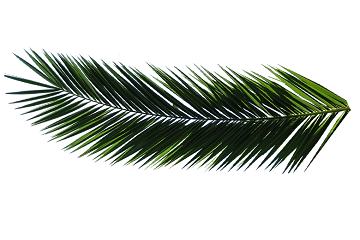
Dairy cattle that are widely kept in Indonesia are Friesian Holstein (FH) dairy cows, which produce the highest low-fat milk production compared to other dairy cow species. Types of feed given to dairy cows can affect milk production and quality, and the health of the dairy cattle. However, the factor of providing quality feed still becomes a constraint, due to the limited number of land for forage feed cultivation. Thus, it is necessary to seek alternative feed which is cheap and easily available throughout the year. Oil palm plantations have the potential to become an alternative source of feed to develop livestock business.
Three researchers consisting of P. Riski from the Study Program of Animal Production Science and Technology, Graduate School, Bogor Agricultural Institute (IPB); B.P. Purwanto from IPB Diploma Program; and Afton Atabany from the Department of Animal Production Science and Technology, Faculty of Animal Husbandry (Fapet) of IPB conducted a study to determine the production and quality of the milk of lactating FH cows fed by palm stalk leaves.
"This is an opportunity for farmers. They can utilize waste products from oil palm plantations which have the potential to be used as an alternative feed for livestock, because they are still available in large quantities, not yet optimally utilized and available throughout the year," said Afton Atabany.
In this experiment, the researcher kept four FH cows which got the first lactation at the fifth month with an estimated age of 24-36 months in UPT of Breeding Centre of Animal Husbandry of Kampar Regency, Riau Province. The cows were reared and fed with king grass (RR) and palm stalk leaves (DPS) with different concentrations (A = 100% RR as control, B = 75% RR + 25% DPS, C = 50% RR + 50% DPS and D = 25% RR + 75% DPS).
Afton conveyed that forage feed in the form of palm stalk leaves was chopped first before being given to the livestock. Cows were fed approximately 3 percent (%) of the estimated live weight and the calculation of nutrient requirements of feed. The forage and concentrate ratio was 60% to 40%. The concentrate given was the tofu dregs. The feed was given twice a day at 8 am and 3 pm.
From this experiment, the team found that the best treatment of palm stalk leaves feeding for lactating FH cattle was 25% of the total forage. Maximum feeding of palm stalk leaves up to 50% of total forage feed was able to maintain the production and quality of milk.
"The feeding of 25% DPS and 50% DPS of the total forage indicates that the milk production is not much different or comparable to the feed without the provision of palm stalk leaves (control). This shows that lactating FH cows are able to maintain their milk production up to 50% palm stalk leaves provided of the total forage given," he said.
He added that the palatability of palm stalk leaves as a feed of FH dairy cattle was placed in the low grade. The use of palm stalk leaves as alternative feed for dairy cattle needed further research in the form of physical and chemical processing or a combination of both to improve the utilization and quality of palm stalk leaves. (TK)