IPB Researchers Produced Snakehead Fish Pie, Snacks For Hemodialysis Patients
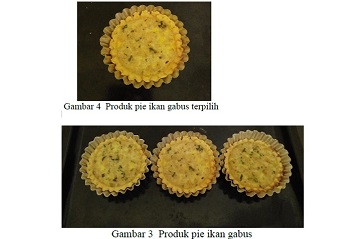
Researchers of the Department of Community Nutrition of the Faculty of Human Ecology of Bogor Agricultural University (FEMA IPB), namely Dr. Budi Setiawan, MS and Dyana Safira Amalia, implemented the useful research program to help patients who require dialysis (HD) process. They developed a food product that is snakehead fish pie (Channa striata) with substitution of corn flour as a high-protein snack for hemodialysis patients. Channa striata, the striped snakehead, is a species of snakehead fish. It is also known as the common snakehead, chevron snakehead and snakehead murrel.
Their research program was based on high prevalence of secondary hyperparathyroidism in chronic kidney disease patients on dialysis in Indonesia which increases every year. By 2014, the number of HD actions in Indonesia (HD 3-4 hour length of each treatment with the help of a dialyzer machine) reaches 375,557 actions. Nutrition in hemodialysis is very important in decreasing complications and improving quality life of patients. Nutrition program on patients with chronic renal failure on dialysis plays an important role in the process of treatment. This hemodialysis therapy causes the patient susceptible to malnutrition, especially lack of protein energy (PEM). As many as 20% of dialysis patients reported to have less protein energy.
"Malnutrition refers to deficiencies, excesses or imbalances in a person's intake of energy and/or nutrients. Malnutrition can also be defined as the insufficient, excessive or imbalanced consumption of nutrients. During hemodialysis, patients lose 0.2-0.3 g / kg or 6-8 g protein, amino acids, and peptides along with dialysis fluids, "said Dyana.
Dyana asserted that dietary intake of renal patients undergoing hemodialysis should be considered to prevent malnutrition. Patients undergoing hemodialysis (HD) commonly develop protein energy malnutrition which is associated with poor survival. Dialysis removes protein waste accumulated in the blood. Unfortunately, some important amino acids are removed during dialysis and thus a higher protein intake is needed to replace the lost protein. If the protein requirement is not met then, it results in malnutrition in such patients Consumption of high-protein foods is recommended to replace the amino acids and albumin lost during the hemodialysis process.
One of food sources with high protein content is snakehead fish pie. Protein content of common snakehead extract is a potential source of albumin as per 100 mL it contains 3.36± 0.29 g protein, 2.17± 0.14 g albumin, 0.77± 0.66 g total fat ; Total Glucose 0.07 ± 0.02 g, Zinc 3.34 ± 0.8 mg; Cu 2.34 ± 0.98 mg and 0.20 ± 0.09 mg Fe. of 25.2 g / 100 g and albumin content ranges between 13.83% – 20.80% in fish protein concentrate.
Common snakehead is known in local language as kutuk, deleg (Java), kocolan (betawi), bogo (sunda), haruan (Kalimantan), gapo, or jilo is one of native freshwater fish that is widely available in many tropical regions such as Asia and Africa, and has been shown to have high nutrition and health benefits. Now, many common snakehead is used as it contains high nutrition and health benefits because albumin content that is high. Snakehead fish extract has been introduced and significantly proven to increase levels of albumin in hypoalbuminemia and to accelerate the process of wound healing in postoperative patients. In addition, common snakehead contains complete amino acids along with other micronutrients such as zinc, selenium and iron.
Dyana explained that several formula to produce this pie, code F2 is product formula selected with moisture content 35.92% (bb), ash 2.76% (bk), fat 31.33% (bk), protein 21.05% (bk), carbohydrate 44.85% bk).
"Utilizing corn flour as a substitute of wheat flour and common snakehead fish as a source of protein, is expected to be innovative in the manufacture of high-protein snack products that can be consumed to replace protein loss in chronic renal failure patients with hemodialysis therapy. Snakehead fish extract has a good potential to increase serum albumin post-operative patients. It also has antioxidants capacity which reacts with free radicals and suppresses its production." she concluded The regular follow-up, counselling, nutritional support helps to improve the calories and protein intake hence improvising the condition of malnutrition amongst the HD patients and helps reduce the rate of morbidity and mortality amongst the patients. (Wied)