Student of IPB Discovered the Alternative Material of Anthracnose Disease Control on Chili
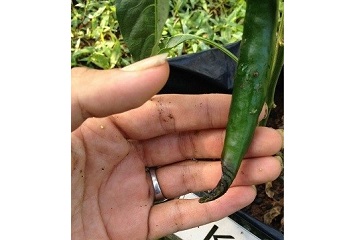
Chili was one of the shrubs that came from the eggplant family. Several types of chili had been known such as the large chili and the cayenne chili. The chili contained vitamin A and C, riboflavin and thiamin. The chili in addition to be consumed as a mixture of cooking, could also be preserved in the form of chili sauce, sauce, pasta, pickles, and dried fruit.
The problem faced by the chili farmers in Indonesia in the production process was the existence of pests and diseases. This would have a negative impact on the yield obtained. The diseases that generally occurred in the chili plant were caused by the bacteria, the fungi, the nematodes, and the viruses. The anthracnose was one of the most common diseases found in every area of the chili plant.
Currently, the anthracnose disease control still rested on the use of synthetic fungicide. There was no other alternative material to replace the use of synthetic fungicide. This was what was underlying Andi Prasetyo, the student of Department of Plant Protection, Faculty of Agriculture (Faperta), Bogor Agricultural University (IPB), to do the research to use another alternative material that was Chitosan in controllng the anthracnose disease on the chili plant.
The chitosan was the polysaccharides derived from the waste of Crustacean skin / shell. The chitosan could stimulate the plant resistance response to pathogen infection. The chitosan used in this research was in the powder form. The chitosan concentration used was 1 percent (%) in the solution form. There were three treatments used i.e. the conventional (comparison), the chitosan with the application of flush on soil, and the chitosan with the spray application.
The result of the research showed that the chitosan treatment with the concentration of 1% and the conventional treatment using the synthetic fungicide able to suppress the occurrence of the anthracnose disease in the field. Although showing the same result, at least the use of chitosan could be an alternative as the substitute for the use of synthetic fungicide.
The chitosan treatment with the spray application had a better result compared than the conventional treatment, so it could be quite effective in controlling the anthracnose disease in the chili.
The advantage of using this chitosan was leaving no residue on the chili plant, more effectively and efficiently compared than using a synthetic fungicide. Other than that, the cost which was issued was cheaper compared than using a synthetic fungicide. (FY/NM)