A Team of IPB Researchers Utilizing Combination of Vitamins and Minerals to Reduce the Stress of Broilers
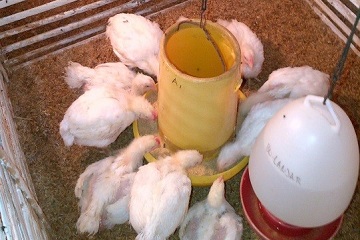
Broiler chickens (Gallus gallus domesticus), or broilers, are a gallinaceous domesticated fowl, bred and raised specifically for meat production. Modern commercial broilers, are artificially selected and bred for large-scale, efficient meat production and although they are the same species, grow much faster than egg laying hens or traditional dual purpose breeds. Modern crosses are also favourable for meat production because they lack the typical "hair" which many breeds have that necessitates singeing after plucking. Both male and female broilers are reared for their meat. Broiler chickens have economic characteristics and rapid growth as meat producers, low ration conversion, can be cut at a young age, and produce quality soft-fiber meat. Of course, raising healthy livestock of any type for fun or profit requires some attention to planning and detail, and broilers are no exception. The well-being of broilers is influenced by several internal and external factors such as maintenance management, stress, nutrition, cage density, ventilation, light intensity, and disease spread. The density of the cage can also affect the quality of carcass and feed consumption.
The broilers require some type of housing to provide protection from predators and to create an environment to promote growth. The broilers require a clean, dry area that can be well ventilated. Ambient temperature is one of important factors that must be considered in the production of broiler chickens. Indonesia as a tropical country has a high ambient temperature that can cause heat stress in broiler. Heat stress causes chickens vulnerable to infectious diseases originating from bacteria such as Escherichia coli and viruses such as Newcastle disease (ND), which negatively affect productivity and health that can cause death and economic losses. Some efforts have been done to overcome those problems by adding feed additive such as antioxidant. Recently, vitamin E and mineral zinc (Zn) are used as antioxidants.
Two experts from the Faculty of Animal Husbandry of Bogor Agricultural University (FAPET IPB), namely Rita Mutia from the Department of Nutrition Science and Feed Technology and Asep Gunawan from the Department of Animal Production and Technology, conducted a study to determine the effect of adding Zn and vitamin E on broilers in a tropical environment. The study was conducted from March to October 2015 at the Field Laboratory (Cage C) of FAPET IPB.
This study was conducted on 400 broiler chickens divided into cage A as control and cage B as a tropical temperature treatment. During 35 days of maintenance, broilers are conditioned in fluctuating natural temperatures throughout the day, which are relatively cold at dawn, tend to be medium-cold in the morning, relatively hot during the day and tend to medium heat in the afternoon or evening. Thus, the heat stress experienced by broilers during the day, especially at noon or at 12 the sun achieves its highest angle sun (highest intensity, shortest shadows), and at 14 at noon is the time the sun achieves the longest solar wave radiation.
Based on these experiments, vitamin E supplementation and Zn minerals in broiler rations proved effective in reducing stress due to heat stress from ambient temperature. This is evidenced by the provision of vitamin E as much as 125 ppm and mineral Zn 80 ppm can improve the final weight and feed efficiency. Efficiency of feed means the consumption of feed decreased, but the body weight increased from broiler chicken. In addition, the provision of Zn minerals as much as 80 ppm is also able to reduce the value of Malondial dehid (MDA), which is the product of lipid peroxidation in blood serum. It shows the presence of antioxidant activity of vitamin E and Zn minerals. The presence of antioxidant activity in the body gives a good effect for the health of livestock as seen from the normal blood profile. (Wied)