A Group of IPB Researchers Designed Hydrogel Wound Cover Made of Palm Oil
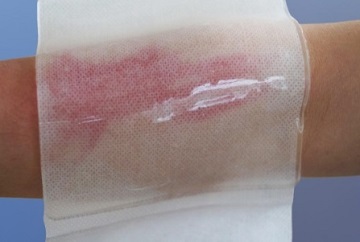
Palm oil is one of the world's most produced and consumed oils. This cheap, production-efficient and highly stable oil is used in a wide variety of food, cosmetic and hygiene products, and can be used as source for bio-fuel or biodiesel. Most palm oil is produced in Asia, Africa and South America because the trees require warm temperatures, sunshine and plenty of rain in order to maximize production. Indonesia is one of the largest palm oil producers in the world. Based on data from the Ministry of Agriculture in 2013, palm oil productivity in Indonesia reached 27.74 million tons and each ton of production produces biomass in the form of Empty fruit bunch (EFB) from oil palm (TKKS) of 1.1 tons.
So far only a small portion of TKKS has been utilized. For example as an organic fertilizer for oil palm plantations. TKKS containing 44.4 percent cellulose, 30.9 percent hemicellulose, and 14.2 percent lignin have not been optimally utilized. TKKS can be utilized as alternative raw material for other high value-added products.
This is what prompted Farah Fahma and Faiza Ayu Lestari from the Department of Agriculture Industry Technology, Faculty of Agricultural Technology, Bogor Agricultural University (Fateta-IPB) to examined the utilization of empty fruit bunch (EFB) as an alternative raw material for cellulosic nanofiber hydrogel, high-strength hydrogels from plant-based cellulose nanofiber.
Farah said, cellulosic nanofiber has potential that can be used as a material for making hydrogel because it is hydrophilic. Hydrogel products constitute a group of polymeric materials, the hydrophilic structure of which renders them capable of holding large amounts of water in their three-dimensional networks. Hydrogel is a water insoluble polymer that has the ability to expand (swelling) in water or a particular solution.
"Hydrogels have been exploited widely in many fields of application, one of them in biomedical fields. Hydrogels have been of great interest to biomaterial scientists for many years. In the field of biomedicine, especially hydrogel can be used as wound cover, lens contact, fever-lowering matrix, drug delivery, and others, "said Farah.
Farah explained, the ideal wound cover is a dynamic and complex process which requires suitable environment to promote healing process. Wound cover should protect the wounds from contamination through germs and bacteria, thus preventing possible infections. The wound cover can absorb exudate and toxic material on the surface of the wound, permeable to the gas, has sufficient porosity so that it can be penetrated by water vapor, non-toxic and non-allergic, well attached to the wound, adaptable to the surface shape of the body, and easily sterilized .
He also added Acid Detergent Fiber (ADF) refers to the insoluble fiber within a plant cell wall and is comprised of cellulose and lignin; whereas, Neutral Detergent Fiber (NDF) is a value comprised of ADF plus insoluble hemicellulose. The research revealed that the Acid Detergent Fiber (ADF) and Neutral Detergent Fiber (NDF) test, cellulose obtained has 69.55 percent cellulose, 17.76 percent hemicellulose and 5.81 percent lignin. Hydrogel preparation was done by performing nanofiber isolation, observation on the size of cellulose nanofiber and hydrogel formation using vacuum filtration and alkaline treatment process.
Each individual wound must be carefully evaluated, categorized, and treated. The importance of identifying the need for debridement, level of exudates, and presence of infection cannot be overstated. Armed with the knowledge on different interactive dressing materials presented in this article, an effective and efficient wound care strategy can be formed. "The resulting hydrogel showed a more stable form with high water absorption rate. The hydrogel has the potential to be used as a wound cover. The research revealed that the hydrogel membrane can maintain a long period of moist environment over the wound bed for enhancing reepithelialization "she said. (Wied)