Executive Boards of Student of IPB Promoted Bank Sampah for the Community of Sukawening Village
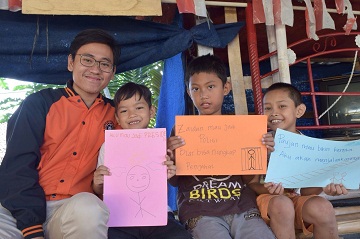
The Badan Eksekutif Mahsiswa (BEM Executive Board of Student) of the Faculty of Economics and Management of Bogor Agricultural University (FEM IPB) will carry out the Community Service Program to the Sukawening village, Dramaga District, Bogor. The agenda of their program is repackaged into “Friends of the Village” and became one of the serial program “Gerakan Mahasiswa Turun Desa (GMTD Student Going to Village Movement (GMTD) of BEM KM IPB. The agenda is planned to be scheduled on 23 September 2017, during which the BEM Team will invite IPB students to go to the field and provide education on the environmental education through a program waste bank, or the community called Bank Sampah.
Sukawening Village is one of 17 Villages located around IPB Campus, this village is has been the coaching Village of IPB. Sahabat Desa has decided to make the village as their coaching village for five years. They planned various different program and will be broken down each year, they will be adjusted into village development need. The present year is the second of its kind, in this second year Sahabat Desa program is focused on the community development, for waste management.
Bank Sampah may sound familiar to some people. Sahabat Desa Student tried to introduce Bank Sampah term to the community of Sukawening Village. This activity aims to increase public knowledge about Bank Sampah as well as increase their income through waste management. Sahabat Desa provides training on inorganic waste processing into various handicrafts. "In the waste processing, we will cooperate with Ratna Batik and Craft," said Chief Executive of Sahabat Desa, Azka Az-Zahra.
In addition to make an approaching program for adults, students of Sahabat Desa implemented the socialization to the children to be the healthy environmental agents in the village. Socialization has been implemented to get a positive response. To ensure the sustainability of the program, there has been a selection of managers of Bank Sampah from among the villagers, as the active participation of the community. The establishment of Bank Sampah facilities and waste management is expected to be well implemented and sustainable. (Wied)