Through Stories, Marine Science and Technology Students of IPB University Introduce Microplastics with the Asa Conservation Community
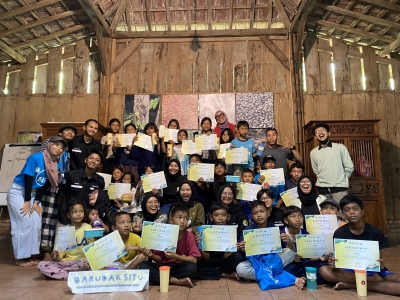
In the midst of increasing global awareness about the negative impact of microplastics on the ocean, a number of IPB University students from the Department of Marine Science and Technology (ITK), Faculty of Fisheries and Marine Sciences (FPIK) collaborated with the Asa Conservation Community (Asarasi) to take part in educational activities about microplastics to the children of Situ Gede, Bogor some time ago.
A number of IPB University students include Juan Al Kautsar, Naufal Faizul, Qudsi Athiyyah, Alfina Damayanti and Ananda Satria.
"It's something new for us to participate in activities and become educational facilitators about microplastics. It is a challenge in itself because it introduces something that is invisible to the naked eye to young children," said Qudsi, one of the Marine Science and Technology (ITK) students involved.
This educational activity uses a unique approach by telling stories from children's books. Titled 'Miko the Mikroplastic', this book tells the adventures of Miko, a microplastic that drifts in the sea. This book provides an overview of the process by which microplastics are formed; microplastic size and shape; and the processes that occur in microplastics while at sea until they reach the bodies of living things. This story combines elements of adventure and imagination, while conveying a campaign to protect the environment through reducing the use of plastic.
Another fun and inspiring understanding is carried out by the simple practice of looking directly at microplastics using a digital microscope. By connecting a digital microscope to a laptop or cellphone that has special software installed, the Situ Gede children can see first-hand samples of microplastics which are often found in the sea.
"We learned a lot from Asarasi regarding methods of approach to children. Asarasi always prioritizes a joyful atmosphere with music in it such as theatrics, fun games and colorful module books," added Qudsi.
Apart from Asarasi, this educational activity also collaborated with the Barudak Situ Community and also Situ Gede stakeholders, added Giri Marhara.
"This educational activity with Asarasi and Barudak Situ really strengthened the scientific foundation for children who often do clean-up activities in Situ Gede. So they know what are the effects of plastic waste on the environment that are invisible or microplastic," said Giri.
Giri hopes that activities like this can continue and can transmit environmental awareness viruses to the community, especially in the Situ Gede area.
"Let's take care of the environment together. Take care Situ! Take care of Earth!” Giri concluded.
Head of the IPB University ITK Department, Dr Syamsul Bahri Agus hopes that this creative idea can be an effective and interesting lesson for children so that education about microplastics can be instilled from an early age.
"Through interesting story books, children can learn in a fun way and develop a love for nature, especially the sea. Thus, in the future our sea will remain sustainable," concluded Dr. Syamsul. (EIH/RAT/Rz) (IAAS/Res)