
IPB University Holds Seminar Presenting Two World Experts Discussing the Eradication of Plant Pests
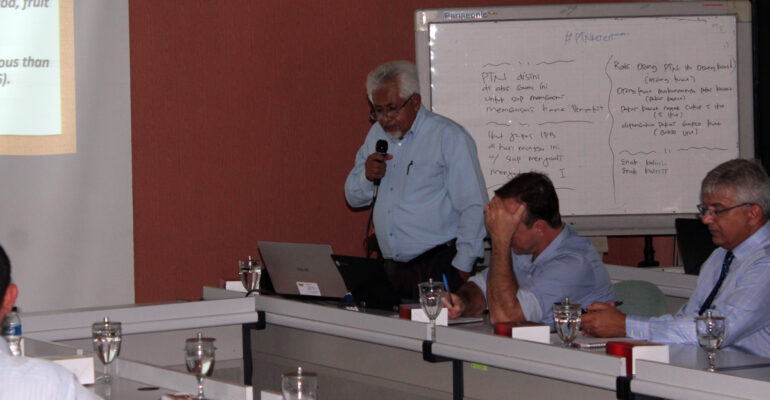
Department of Plant Protection, Faculty of Agriculture, IPB University held a seminar on management of plant pests. The seminar was attended by two speakers, Prof. Victor Galea from the University of Queensland, Australia and Mr. Tajuddin Ismail from the International Rubber Research and Development Board.
Prof. Victor introduces one form of treatment for plant pests, namely the injection of herbicides without the need for spraying chemicals that have the potential to damage massively. This herbicide is directly injected into the plant stem and attacks directly on the affected part.
There are many models of injection equipment. The advantage of this injection method is that it is easier to use and has no exhaust components.
On the other hand, Mr. Tajuddin explained the new plant diseases which later became the talk. The disease is caused by Pestaliopsis, one of a group of fungi. This plant disease was discovered in rubber plantations in 2018. One of the signs is deciduous leaves.
Pestaliopsis not only attacks rubber trees, but has the potential to attack oil palm, coffee, cocoa, and fruit trees.
On this occasion, Mr. Tajuddin explained the chronology that occurred at Bumi Rambang, Palembang. In January 2018, there was high rainfall. At this time, a large leaf fall occurs so that the canopy is reduced. In addition, fungus appeared, making spraying on rubber plantations carried out. The herbicide used in fighting this tree pest is Benomyl.
Unfortunately, even though deciduous leaves gradually decrease, when high rainfall returns, deciduous leaves are inevitable. This causes the tree canopy to be reduced by 60 percent.
“This pest must continue to be eradicated and as soon as effective methods are found. Deciduous leaves that are out of control will cause photosynthesis to be disrupted and weaken the defenses of the tree. These two things will certainly reduce the production of rubber trees,” he said. (RYS)

