
Jakarta and Bandung are predicted to be Megacities that can defeat Tokyo
The growth of Jakarta, Bogor, Depok, Tangerang, Bekasi (Jabodetabek) which has become a unified system and cannot be separated again, is predicted to be a megacity that can defeat Tokyo. Head of Regional Research, Planning and Development (P4W) Institute of Research and Community Service (LPPM) Bogor Agricultural University (IPB), Dr. Ernan Rustiadi, said that currently, Tokyo has approximately 35 million inhabitants while Jakarta and surrounding areas have 32 million inhabitants.
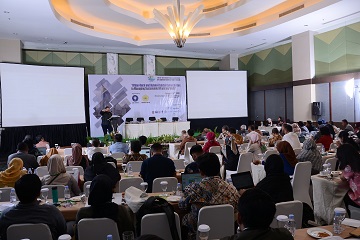
"Population growth in Jakarta and its surroundings can still grow and expand to the east. These are signs of joining Jakarta and Bandung to form mega-urban areas. A giant urban entity, because of the increasingly connected between Jakarta and Bandung. The difference with Tokyo is that Tokyo is relatively stagnant, but Jakarta continues to grow, "he said in the 6th International Conference of Jabodetabek Study Forum themed" Urban-Rural and Upland-Coastal Connectivities in Managing Sustainable Urbanizing World "at IPB International Convention Center, (29 / 8). This event was held by P4W LPPM IPB in collaboration with Pakuan University.
Dr. Ernan assesses the growth of this megacity with no signs of stopping. Based on the results of his research, Dr. Ernan saw signs of unifying Jakarta and Bandung which led to Jakarta Bandung Mega-Urban as a large unit.
These signs must be addressed properly because new problems will arise such as an administrative division or fragmented government system problems. There are around 11 autonomous administrative regions which in the end each region runs independently. There must be a management unit.
Meanwhile, Minister of National Development Planning (PPN) / Head of the National Development Planning Agency (Bappenas), Prof. Dr. Bambang PS Brodjonegoro said there were some fundamental problems in urban areas such as Jabodetabek. That is related to the availability of clean water supplies which are increasingly scarce and clean water networks that cannot cover some households in Jakarta.
"Besides that, it is also a matter of sanitation. It turns out that the level of sanitation availability of houses in Jakarta is also below the national average. Not only that, related to transportation, where Jakarta with such a large population does not have adequate public transport. Very dominated by private vehicles, both cars, and motorbikes. Another issue is housing because after all everyone needs a place to live and the existence of rusunawa and rusunawa for the middle class and the middle to lower class is still very limited so that eventually many people who are still living in a place of residence or area are less feasible. We also have to face natural phenomena where there is a serious land subsidence on the north coast of Jakarta. In addition to the demographic bonus, the number of 200 million workers in the productive age continues to drive the economic growth of the investment base. I hope that entrepreneurs will grow up among the younger generation so they don't face youth unemployment, "he explained.
According to him, this issue must be resolved. One percent increase in Indonesia's urbanization contributes to a four percent increase in per capita Gross Domestic Product (GDP). This urbanization must be used well to benefit national economic growth but if managed poorly, there is a risk of urbanization without growth.
He said that the role of academics is expected to provide a clear picture of urban planning that must be done. In addition, this seminar will bridge and facilitate experiences, policies, and studies related to the sustainable development of megacity not only in Jabodetabek but also Asia as a solution to map various challenges and to bring together a common understanding of the development of Jabodetabek and Asia Megacities. (flw)

