A Group of IPB Researchers Utilized Jatropha Curcas Seeds for Particleboard
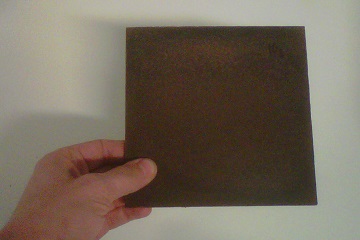
Jatropha curcas is a species of flowering plant in the spurge family, Euphorbiaceae, that is native to the American tropics, most likely Mexico and Central America. It is originally native to the tropical areas of the Americas from Mexico to Argentina, and has been spread throughout the world in tropical and subtropical regions around the world, becoming naturalized or invasive in many areas. It is a plant with a high potential with many technologically utilized parts among which seeds most of all. Jatropha seeds are usually used as raw material for making biodiesel and produce by-products in the form of jatropha seed waste. As biomass, Jatropha plant can be used as a reinforcement in biocomposite development. Jatropha contain high amount of carbon especially in seed/husk, fruit shell and seed cake and can be used as filler in composite fabrication in the form of carbon black and activated carbon. A meaningful utilization of these secondary biocommodities is the key for optimization of the whole technological process. Ika Amalia Kartika, a researcher from the Department of Agroindustrial Technology, of the Faculty of Agricultural Technology, of Bogor Agricultural University (Fateta IPB), explained that the mixture of fiber and protein can be considered as a natural composite. Jatropha seeds that can be utilized into composite products such as particleboard using hot-pressing process.
Particle board also known as particleboard, low-density fibreboard (LDF), and chipboard is an engineered wood product manufactured from wood chips, sawmill shavings, or even sawdust, and a synthetic resin or other suitable binder, which is pressed and extruded. Generally, main components to manufacture the particle board or composite board are lignin, cellulose and hemicellulose by using synthetic adhesives such as urea formaldehyde (UF) and phenol-formaldehyde (PF). The use of synthetic adhesives has a negative impact on the environment and health. Efforts to reduce the use of synthetic adhesives in the manufacture of particle board has been done by utilizing natural adhesives such as proteins," said Ika.
The group of Bogor Agricultural University (IPB) Research Team, namely Fherdes Setiawan, Ika Amalia Kartika, Mohamad Yani and Dede Hermawan tried to optimize the production process of jatropha pulp particle board. Optimization of particle board production process was carried out by four factors of water content, steaming duration, felting temperature and duration.
"The objective of this research is to know the physical and mechanical properties of particle board of Jatropha curcas and to determine the water content of pulp, steam time, temperatures, and optimum time to produce the best particle board quality," she said.
Particle preparation of jatropha seed waste starting from the pretreatment stage (increasing the water content of pulp and steaming), sheet making and board forging process. The forging process was carried out after the particle board sheet was formed. The forging was done by using a hot press machine at a temperature of 1200 – 2000 Celsius for 2 – 10 minutes and pressure of 200 kgf / cm2.
The researchers explained they revealed that the optimum production condition was obtained at water content of 15 percent, steaming duration was 22 minutes, at 1800 Celsius, and anchoring time of 8 minutes with response of 6.51 percent water content and water absorption 34, 67 percent. "The characteristic of extract of jatropha oil seeds materials were fiber content (38,7 percent), and protein (21,25 percent), they have high probability to be utilized as biocomposite product such as particle board," she said.(Wied)