Innovation of Bekasam Made of Nila Fish (Oreochromis niloticusthat) Created by Group of IPB Researchers
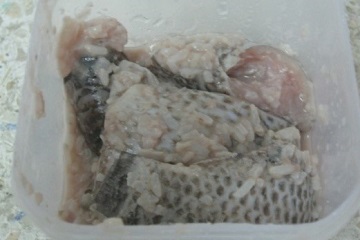
Bekasem or bekasam is a fermented freshwater fish product popular among people from Palembang, Indramayu or Kalimantan. In Central Kalimantan, bekasem is referred to as wadi. Traditionally, the main raw material used for bekasem processing is common carp (Cyprinus carpio). The raw material for process of making waste generally use raw materials of freshwater fish with the addition of salt and carbohydrate source of rice and tape with fermentation length of about 4-10 days. Desniar, a researcher from the Department of Aquatic Product Technology, Faculty of Fisheries and Marine Sciences, Bogor Agricultural University (FPIK IPB) explained that bekasam is a fermented fish product that has an acidic taste and contains lactic acid bacteria (BAL) which has probiotic potential with beneficial effects on human health.
"Each region has its own distinctive process to produce bekasam. I am interested in developing this fish fermentation products. Bekasam is well known in Indonesia as one of fermented fish product. Several fermented products generate lactic acid bacteria (LAB) which has probiotic potential with beneficial effects on human health. Generally all probiotic bacteria initially came from lactate acid bacteria development, "he said.
Together with his research colleagues Astri Nurnaafi and Iriani Setyaningsih they try to prove that the bacteria from tilapia fish that it has potential as a probiotic bacteria. The aim of this study was to evaluate the probiotic potential of LAB isolated from bekasam. The main raw material used was nila fish (Oreochromis niloticusthat). Two LAB isolates namely NS(5) and NS(6) were selected based on their resistance to gastric pH (pH 2.0), intestinal pH (pH 7.2) and bile salts (0.5% oxgal). Pathogenic test, antimicrobial activity test, characterization and identification of the isolats were also performed respectively.
"The study revealed that NS(5) isolate survived at pH 2.0, pH 7.2 and bile salts (oxgal). It was found out that NS(5) isolate was non pathogenic bacteria which exhibited antimicrobial activity against Salmonella typhimurium ATCC 14028 and Escherichia coli. The characterization result showed that NS(5) isolate was Gram-positive bacteria, rod-shaped, non-endospore producer, negative catalase, homo fermentative, non motile, having an amilolitik as well as lipolitik activity and able to grow at 30-37°C, NaCl 2-7% dan pH 4.4-9.6. Isolate NS(5) isolate was then identified as Lactobacillus plantarum 1 strain with 99.9% of similarity. The results of the study suggest that lactic acid bacteria from NS (5) isolates have properties as probiotic, non-pathogenic candidates, have high antimicrobial activity against E. coli (7.0 mm) and S. Typhimurium ATCC 14028 (6.8 mm), "he explained.
He added, in the future candidates of probiotics bacteria can be developed into value-added fermented foods products utilized as starter.
"Made into drinks or in tablets or capsules and can also be developed for disease control and prevention," he said. (Wied)