It’s Tempe Flour of Soybean Sprout Made by IPB which was Rich Benefit
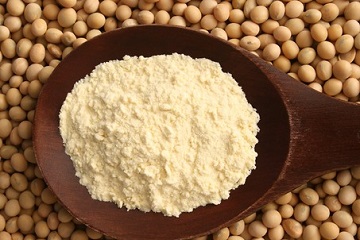
Tempe was a traditional Indonesian food fermented by the mold of Rhizopus sp. The price which was relatively cheap, the good functional properties, and the high protein content, made tempe more favoured by various layers of the community. The main raw material of tempe was generally soybean, which was known to have a higher protein content compared to other grains.
Made Astawan, Muhammad Ichsan from Department of Food Science and Technology, Faculty of Agricultural Technology, and Tutik Wresdiyati from Department of Anatomy, Physiology, and Pharmacology, Faculty of Veterinary Medicine, conducted the research about the physiochemical characteristics of tempe flour of the soybean sprout. This research was conducted in Kampong Leuwengkolot and Rumah Tempe Indonesia, Bogor.
Astawan said, the obstacle faced so far was the high number of soybean imports due to insufficient local soybean availability. This made the tempe craftsmen generally use the imported soybean as the raw material production. So that it was necessary to develop the local soybean that was Grobogan varieties as the alternative raw material of tempe.
He explained, one of the innovations that could be done to improve the quality of the soybean tempe from Grobogan was to modify its raw material, which was using the soybean sprouts. The germination process was chosen, because it was an applicative technology, which was to improve the quality of tempe nutrition with the relatively low cost.
He said, the main problem faced in tempe was its relatively short shelf life due to its high water content, as well as the presence of mold that continued to grow and multiply. “Therefore, the flour making is the alternative processing to extend the shelf life and tempe’s usability,” he said.
“The soybean is germinated within 28 hours, then it is processed into tempe. The tempe of soybean sprouts and the soybean tempe are freeze-dried for 26 hours, then milled into the tempe flour of the soybean sprouts (TKK) and the soybean tempe flour (TK),” he said.
He added, the flour of TKK contained the contents of protein (53.37%), antioxidants (24.97 mg AEAC/100 g tempe), vitamin E (5.08 mg/100 g), isoflavones (81.75 mg/100 g), and some minerals (Ca, P, Fe, Zn) which were higher compared to the Flour of TK. The Flour of TKK also had the better quality compared to the flour of TK.(AT/Zul)