Researcher of IPB: The History of Indonesian Palm Plantation Land was Mostly from the Conversion Result Land
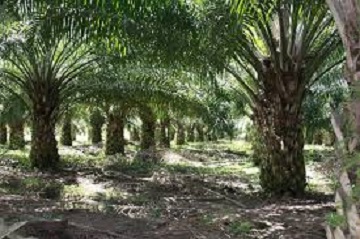
Oil palm plantation had contributed very significantly to the development of the national economy. However, the existence of the palm oil had reaped many negative accusations in the environmental aspects, thus becoming a polemic in the public sphere. If it continued to be allowed, it was feared that it would cause the systemic potential losses to Indonesian oil palm plantations as a whole.
That’s why four researchers from Faculty of Forestry, Bogor Agricultural University (Fahutan of IPB), namely Yanto Santosa, Arzyana Sunkar, Erniwati, and Intan Purnamasari conducted the research related to the historical development of status, the land use, and the biodiversity of Indonesian palm oil plantation. The data were collected from February-April 2016 in 8 Large Palm Plantations (PSB) and 16 Self-Help Palm Oil Plantation (KSS) which were included in 4 Districts in Riau Province.
The result of research indicated that when the oil palm plantation business permit and the certificate of Hak Guna Usaha / Cultivation Rights (HGU) were issued, the status of the entire area of PSB was not a forest area. However, seven of the eight concession areas of PSB came from the conversion of the forest area (67.70% came from HPK, 30.35% came from HPT, and 1.95% came from HP). The history of the land use before PSB operated was: 49.96% were the ex HGU of other companies, 35.99% ex HPH, and 14.04% ex community farms.
“These data are supported by the result of interpretation of the landsat image of the concession area of 1 year, before PSB obtains the business license. The result of interpretation indicates that 49.96% in the form of the rubber plantations, 35.99% in the form of the secondary forest, 10.7% in the form of the open land, 3.03% in the form of the shrubs, and 0.84% in the form of the dryland farming mixed with the shrubs. Meanwhile, the status of land on the observed KSS (47.5 ha), of 91.76%, the land status is not the forest area, when the area is used as the palm oil plantation, while the rest (8.24%) still has the forest area,” said Yanto.
The history of the land use in 16 KSS (47.5 ha) showed that the entire oil palm plantation was a field of former transmigrants and local communities. This result was supported by the results of the landsat imagery analysis showing that most land cover were prior to KSS in the form of the open land (73.68%), while the rest was in the form of bushes.
Total species of animals found in the study sites were 13 species of mammals, 73 bird species, 85 species of butterflies, and 32 species of herpetofauna (20 species of amphibians and 12 species of reptiles). The number of species of mammals, birds and butterflies were found mostly in non-palm land cover areas (SB, HS, NKT), while the herpetofauna more commonly found in the palm area. Other than that, it was found also 3 types of worms with the higher density levels found in KSS compared with PSB. Based on Government Regulation No.7 in1999, there were 2 types of mammals and 14 species of protected birds.(IR/Zul)