Bioremediation of Crude Oil Polluted Soils by A Group of IPB Researchers
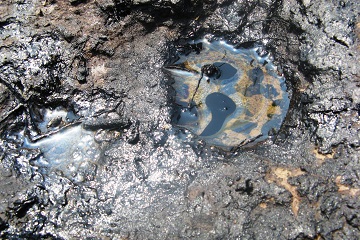
Oil and natural gas together make petroleum. Petroleum, which is Latin for rock oil, is a fossil fuel, meaning it was made naturally from decaying prehistoric plant and animal remains. It is a mixture of hundreds of different hydrocarbons molecules containing hydrogen and carbon that exist sometimes as a liquid (crude oil) and sometimes as a vapor (natural gas). Oil and natural gas are the main sources of energy for transportation, household and industry. The environmental impact of petroleum is often negative because it is toxic to almost all forms of life and its extraction fuels climate change.. Improving our knowledge on the effects and remediation of oil-related pollution has therefore a critical significance in Indonesia’s future in the respect of sustainable use of the environment. The methods used in the remediation of oil polluted soils can be grouped as physical-chemical processes (shallow soil mixing, oxidation-reduction, hydrolysis-neutralization, stabilization-solidification, mobilization-immobilization, soil flushing-washing), thermal processes use (heat to increase the volatility, to burn, decompose, destroy or melt the contaminants) and biological processes (bioventing, biopurging, hydraulic-pneumatic fracturing, soil bioinjection, air and water flushing, biopolymer shields and phytoremediation).
A group of experts of Bogor Agricultural University (IPB) conducted a study on the performance of Oil Spill Dispersant (OSD) from palm oil surfactants with the addition of Pseudomonas aeruginosa IPBCC.b11662 bacteria for bioremediation of contaminated soil of petroleum hydrocarbons. The researchers are Shafira Adlina, Mohamad Yani and Erliza Hambali from the Department of Agricultural Industrial Technology, Faculty of Agricultural Technology (FATETA).
Mohamad Yani explained, petroleum contamination on the ground is a threat to human health. The presence of high molecular weight compounds with very low solubility in water prevents natural biodegradation process from working efficiently in hydrocarbon contaminated soils. These compounds also penetrate macro-and micropores in soil and thus limit water and air transport that would be necessary for organic matter conversion In areas that rely on ground water as the main source of clean water and drinking water can cause serious effects, because petroleum can reach the site. Petroleum contamination, although with very low hydrocarbon concentrations will greatly affect the smell and taste of ground water. Soil bioremediation is the process in which most of the organic pollutants are decomposed by soil microorganisms and converted to harmless end products such as carbon dioxide, methane and water. "Therefore, the handling and processing of biological waste to overcome the problem of hydrocarbon pollution is an effective alternative and friendly to the environment," he said.
Bioremediation is the technologies and methods that have been investigated for the cleaning up oil contaminated soils, bioremediation has appeared as the most desirable approach due to its low cost and ability to hinder the accumulation of contaminant. He said, biodegradation is a process of natural recovery naturally using the activity of microorganisms to degrade harmful organic compounds into harmless simple compounds. The addition of OSD to the bioremediation process contributes to increasing the solubility of oil in the liquid phase, so that the oil is more easily broken down by bacteria.
An oil dispersant (OSD) is a mixture of emulsifiers and solvents that helps break oil into small droplets following an oil spill. Small droplets are easier to disperse throughout a water volume, and small droplets may be more readily biodegraded by microbes. Dispersant use involves a trade-off between exposing coastal life to surface oil and exposing aquatic life to dispersed oil. Common OSD criteria are low toxicity for mammals and aquatic environments and are easily degraded. An oil dispersant is a mixture of surfactants and solvents that helps break oil into small droplets following an oil spill.
As a general guide, a dispersant:oil ratio f 0.5: 1 (0,5 to one) is recommended, as that was 91,1% during six weeks incubation period. The result of mass spectrometry gas chromatography analysis showed that the six treatments degrade hydrocarbons by cutting the carbon chain of crude composite compound into shorter carbon chains. However, dispersion will be affected by many factors including oil type, weathering, slick thickness, application method, and prevailing conditions. The OSC should set specific dispersant dose rates based on any relevant information available for the spilt oil e.g. laboratory results or past experience. Most importantly, the results of effectiveness monitoring of field applications should be used to revise the dose rate. (Wied)