
Prof. CecepKusmana: Solutions to Overcome Floods, Landslides and droughts in Indonesia
A natural disaster is a major adverse event resulting from natural processes of the Earth; examples include floods, landslides, and droughts. Theseexamples of disaster can cause loss of life or property damage, and natural resources that are essential to sustain life and development of the national development.
According to Prof. Dr. Ir. CecepKusmana, the Professor in the Faculty of Forestry, Bogor Agricultural University (IPB), there are four solutions to overcome these disasters, namely: (1). Increasing the volume of water stored in the soil; (2). Reducing the runoff water; (3). Increasing the uptake of carbon (carbon sequestration); and (4). Reducing the amount of greenhouse gas emissions (GHG) or reducing CO2 emissions to minimize the occurrence of that global warming that cause climate change.
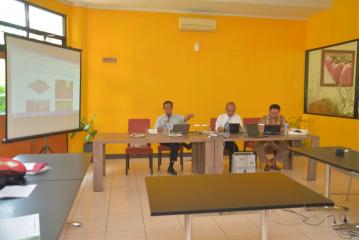
"To counteract these impacts of stormwater runoff, it is suggested that institutions closely related with forest and environmental management should adopt and integrate regulations for the management of stormwater for all new development. Moreover, the indigenous knowledge and simple life for the conservation of natural resources and environmental management must be practiced," said Prof. Cecep at the persconference on the Dramagacampus, Bogor, on Wednesday, 4 June 2014.
Furthermore, Prof. Cecep stated that forest vegetation plays important roles in the management of the hydrological system, especially the "sponge effect". It will help to slow down and temporarily store runoff, which further promotes infiltration, and decreases flooding and erosion downstream and regulate the water in dry season. It will disfunction if the vegetation in the watershed is degraded or damaged. "In all tropical areas, 90 percent of farmers in the lowlands depend on the activities of 10 percent of the people living in the headwaters area. Ganges River watershed in India for example, where 40 million people living in the Himalayas have affected 500 million people in the lowlands, "said Prof. Cecep. The presence of trees also helps.
Therefore in the high rainfall zones, trees, forests and other vegetation and their associated soils are often referred to as "green infrastructure", they are used to manage 10-40 percentstormwater runoff flooding. In addition, the presence of litter and activity of microorganisms may increase water infiltration into the soil to water savings. Thus the existence of forests in high rainfall areas may reduce the risk of flooding between 10-40 percent and increase water savings through the litter more than 4 percent.
Following deforestation in a rainfall catchment area, such as in Punck or Lembang, the water moves more quickly from the land to the rivers, causing erosion and stripping the topsoil. Forests provide many ecosystem services. They support biodiversity, providing critical habitat for wildlife, remove carbon dioxide from the atmosphere, intercept precipitation, slow down surface runoff, and reduce soil erosion and flooding. Trees, forests and other vegetation and their associated soils are often referred to as "green infrastructure" when they are used to manage stormwater runoff.
"With regards to landslides on the unstable soils, deforestation increases the risk of major floods nearly five times the incidence of landslides and nearly three times higher volume of runoff. New roads construction increase 50 times higher on the risk of on landslide incident and move 30 times higher of volume of soil run off. Forests have a natural ability to absorb water when it rains, and to release that water slowly into rivers, therefore, forest management particularly unstable area is really important, "said Prof. Cecep, the Chairman of Graduate Studies Program on the Natural Resources and Environment Management of IPB.
It is important to note that for reforestation programs we should utilize appropriate trees.In addition we should also take care the environment of the forest floors, its bushes and ltters. Some rainwater stays on the leaves, and it may evaporate directly to the air (the more water used in the watershed, the less remains to run off). (Wied).

