With 576 Digital Courses in the Works, IPB University Develops the IPB Digital Core Standard
Digitizing courses is not simply a matter of transferring conventional lecture materials to a digital format. It requires a redesign of the learning experience focused on students’ mastery of competencies.
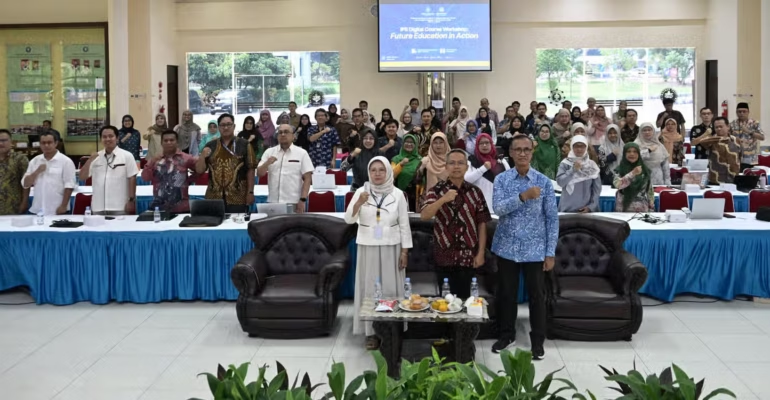
This was conveyed by IPB University’s Vice Rector for Education and Student Affairs, Prof Deni Noviana, during the IPB Digital Course Workshop: Future Education in Action at the IPB Dramaga Campus in Bogor on Tuesday (10/14).
“Technology is not merely a supplement to learning, but it must be integrated into the pedagogical design, from the presentation of material and student activities to assessment. The fundamental question is what competencies will students master, and how can the learning design help them achieve these optimally” he said.
One Standard for 576 Digital Courses
Prof Deni noted that IPB University has launched a digitization program by preparing approximately 576 courses for development into digital formats. According to him, the success of this program is measured not only by the number of digitized courses but also by the quality of the content, its alignment with learning outcomes, student engagement, and its impact on improving educational quality.
To ensure systematic and consistent implementation across all faculties and schools, IPB University has developed the IPB Digital Core Standard as a common framework. This approach emphasizes the digital by design concept, wherein technology is designed from the outset as an integral part of the learning process.
Inclusive and Competency-Oriented
This principle aligns with the statement by the Director of Educational Transformation and Learning Technology (DTPTP) at IPB University, Prof Yulin Lestari, that digitization must be oriented toward competencies, learning outcomes, and student needs.
One of the principles applied is universal design for learning (UDL), a learning design approach that takes into account the diversity of students’ needs and characteristics to make access to education more inclusive.
“Learning in the era of disruption requires us to adapt to the availability of digital content. The focus remains on competencies, learning outcomes, and students as the center of the learning process,” she explained.
AI and Three Party Collaboration
Prof Yulin also highlighted the potential of artificial intelligence (AI) to assist in the development of learning content. However, its use must adhere to ethical standards and academic integrity in accordance with IPB University’s guidelines for AI use in the three pillars of higher education.
In practice, digitization involves collaboration among faculty members, who are the custodians of academic content, learning development teams that support pedagogical innovation, and technical teams responsible for content production and integration into the learning management system (LMS).
Through this workshop, he hopes that each participant will produce a concrete, measurable, and ready to use course digitization plan as part of the effort to build a learning ecosystem that is adaptive, inclusive, and focused on improving graduate quality. (AS) (IAAS/WSG)